
Analog #1 Review
“There is no trap so deadly as the trap you set for yourself.” – Raymond Chandler
Anolog #1 is a fun book, until you look deeper. That’s not to say that it’s not worth a read, as the premise is rich, the characters are enjoyable, and the setups are exciting, but the familiarity with the genre does little but remind the reader of a dozen other examples of similar stories. From movies, serials, and comics from the 40s right on up through today, Analog tries to be different yet feels more like a new layer of the same.

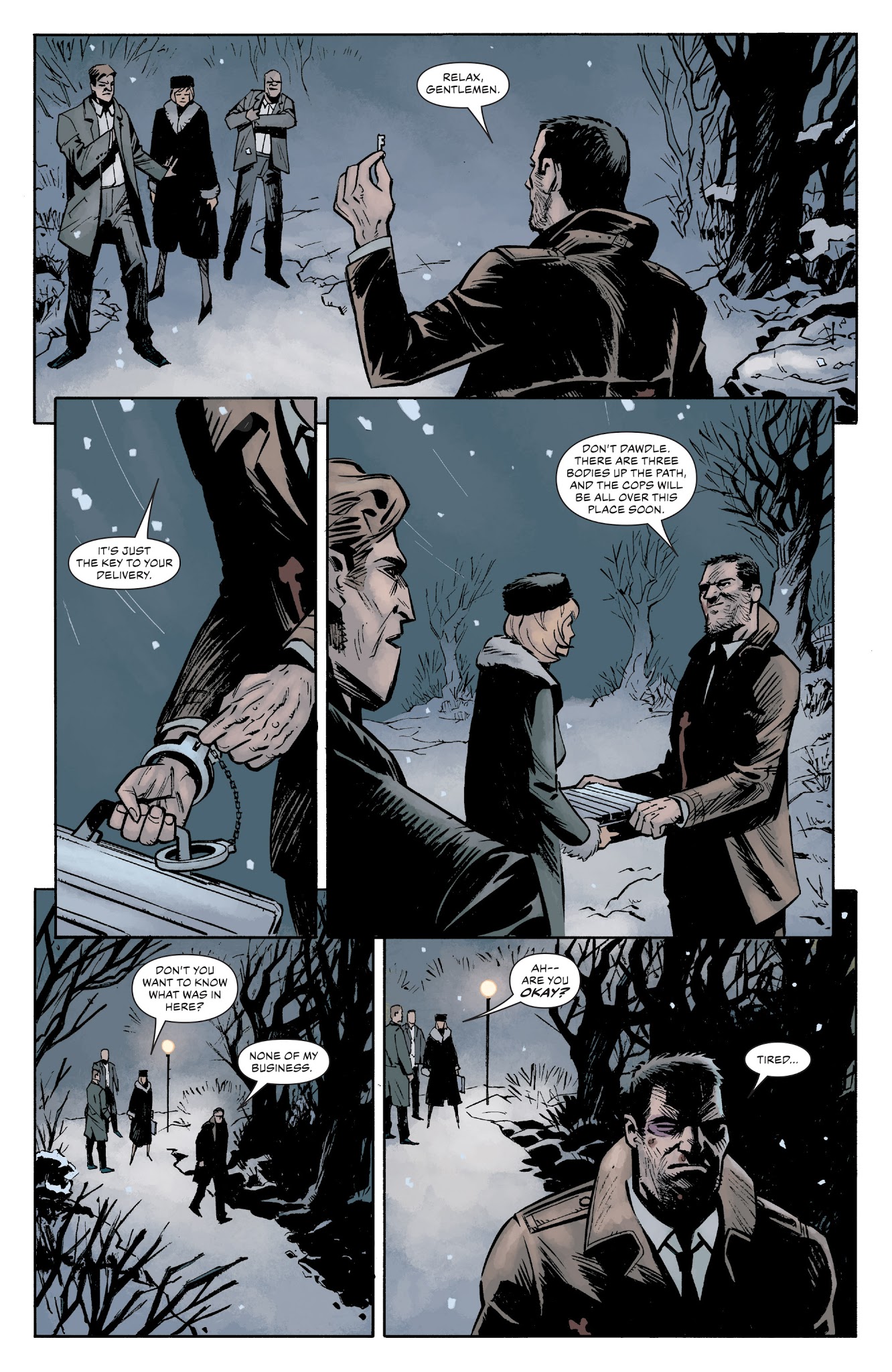
The “private eye” or “hired gun” tropes seem the most evident, as the main character Jack McGinnis narrates in seemingly the same sort of cadence. There’s little nuance in the character as he begins on page one having been through hell, bleeding all over himself, yet otherwise unfazed. A familiar tongue-in-cheek wit and tough guy exterior read like the Humphrey Bogart’s of old, or even the Josh Brolin’s of new, but there is one thing that all of these characters share; they’re all enjoyable to watch. Even if Jack McGinnis is a recycled character, it’s a character that has an audience.
One thing the book does decently is to take a practical, earthier character like this and place him in a futuristic setting. The writer, Gerry Duggan, does give enough context about why Jack lives “unplugged,” and that is all the reason needed to let go and enjoy the character in these new surroundings.
“The internet is a big distraction.” – Ray Bradbury
Duggan has begun to tell us this story of Jack, who’s not a P.I. mind you, but a “ledger man.” He’s also one of the parties responsible for all internet security to become 100% open, meaning any information one could want off of another’s phone, one could merely look it up. Now, anyone that has secrets but wants to share said secrets, enlists ledger men like Jack to physically transport these treasures to the desired recipients via handcuffed briefcases. This mode of transportation makes the “paper pushers” targets, which does add to the conflict within the pages, but doesn’t feel overly practical. But still, like with the tough guy trope, it’s still fun to watch play out.
Really the only detriment to Duggan’s writing is that there are small moments when it almost feels preachy. There’s a subtext present that feels a little political, not overly distracting… for the most part. Once or twice, it’s not hard to see exactly where Duggan’s ideals may fall, or perhaps they’re Jack’s. Either way, there is a bump or two in an otherwise fun escape into another reality.
“We don’t make mistakes, just happy little accidents.” – Bob Ross
Overall the art by David O’Sullivan and color by Jordie Bellaire reflect the story; the point gets across, but don’t think about it too hard. Essentially, neither is dynamic and both feel flat, but really only upon further inspection. If a reader’s intention is to turn the ol’ brain piece off for a bit and be entertained, boom, this is the book. Conversely, if a reader wishes to study the page and the dynamism typical with comic book art, this may not be the one to ponder or draw from. O’Sullivan depicts the scenes well enough, but his drawing feels like John Romita, Jr. if John Romita, Jr. forgot how to draw hands or any amount of depth. The character proportions continually shift and again, just feel flat. The color does nothing to try and rectify this, as it too is a dull, muted palette that’s just lain over the top.
“A pessimist sees the difficulty in every opportunity; an optimist sees the opportunity in every difficulty.” – Winston Churchill
All told, Analog feels like a new telling of a familiar story. It’s definitely worth hanging around for another issue or two to see what separates this iteration from others, or just to curl up in that freshly washed blanket of old. Either way, Jack is bound for varying levels of adventure and snark, and could very well prove worth taking that journey with.