Death Fight Forever #1 // Review
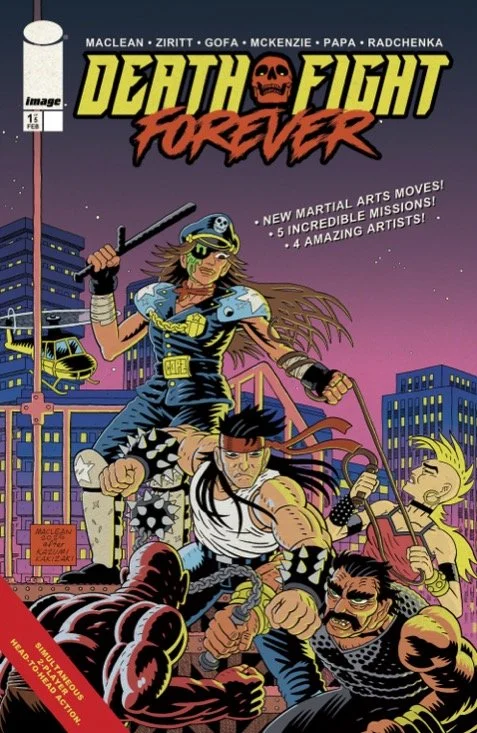
There’s a pyramid in the jungle. Commander Thunderfang is approaching the structure. He’s ready to launch an assault. It’s a heavily-fortified facility, though. Thankfully, he’s not going-in alone. He’s accompanied by a couple of elites: Bash and Crash Biggle. They may be up against almost insurmountable odds, but these are action heroes. There’s a good chance that they’ll be able to emerge victorious, right? They’re about to find-out in Death Fight Forever #1. Writer Andrew MacLean and artist Alexis Ziritt open a video game-inspired action comedy miniseries that moves swiftly forward under the power of carefully curated action movie tropes.
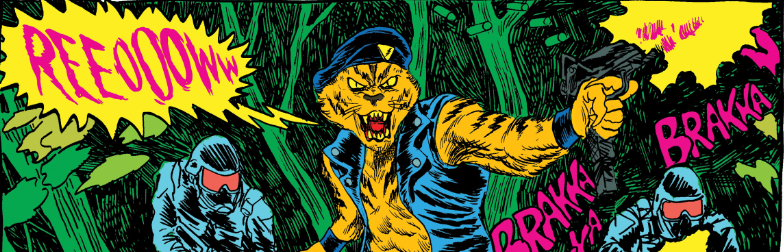
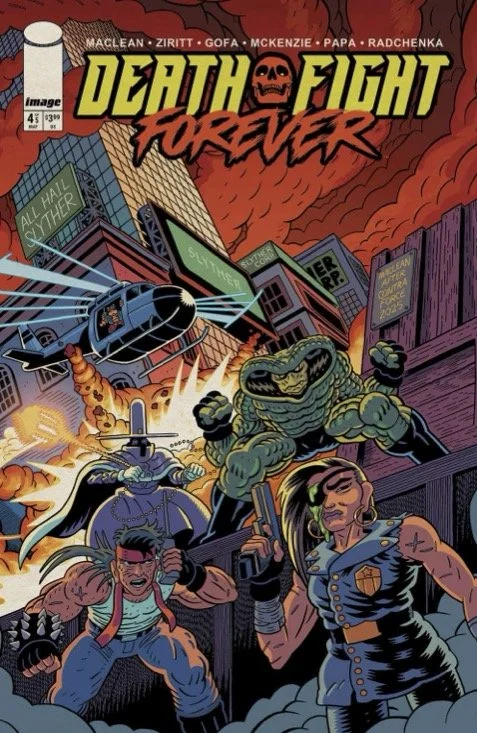
There’s a huge door at the entrance to the pyramid. It’s going to take a long time for the three-person assault force to make it through. This gives the sinister LordSlither an opportunity to plan for his response to the assault. Bash. Crash and Thunderfang might be expecting a lot of different options as to what Slither might be defending himself with. Not a one of them is expecting the helicopters to come-in. What they’re doing with the helicopters isn’t exactly expected either. Things are going to get a whole lot weirder before anything can get better.
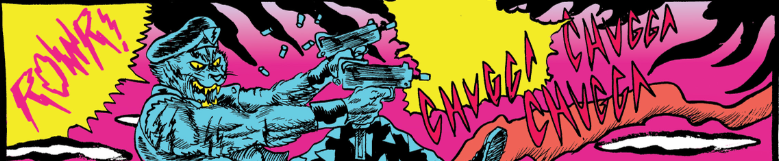
The issue opens with a splash page featuring a three-headed, three-legged snack resting on a moonlike sphere with the words “Press Start” written on it. MacLean is leaning so far nto the video game easthetic of the storytelling that it might as well be a mini-comic that accompanied an old Sega Genesis game. The story is appealingly simple with a brisk and breezy action/adventure with plenty of explosive moments. It all moves forward appelaingly bereft of any kind of subtlety. There isn’t a whole lot going on here, but that doesn’t mean that it isn’t fun.
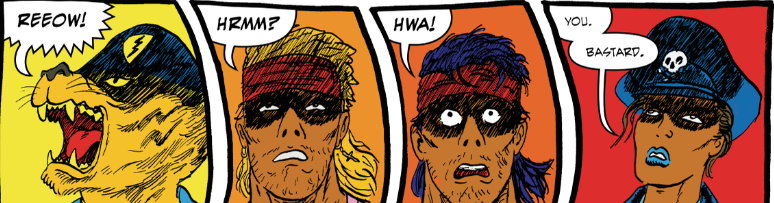
Ziritt’s art is enjoyably crude. It has a mid-1980s indie comic feel about it. The scratching is. The heavy detail. The lack of depth or sophistication in the rendering. It all feels so very, very familiar. And if it didn't feel as familiar as it did, it would seem abrasively juvenile. Rather than going for anything stylish or complex, Ziritt pulls in the action into the page in a way that feels reasonably appealing. Thankfully, the artist isn't trying to do do anything to complicated with framing the art as a video game or anything like that. That might work under different circumstances. With the artist style, however, it's best to just approach the action of the story in a very straightforward manner.
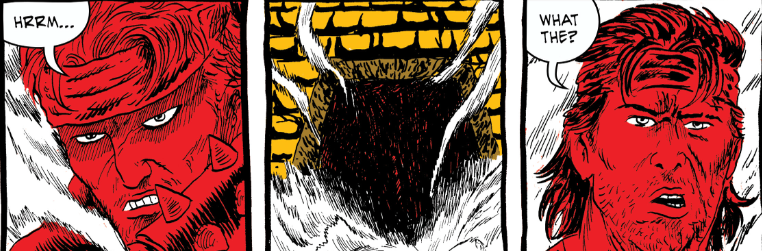
Each issue in the series appears to be approaching the overall story from a different level. The story will advance and a likely feature many different characters. There would be ways of framing the action that would feel a little bit more like a stylized video game. They're not absolutely necessary, though. The overall feel of a story is appealing enough that it doesn't have to lean too far into the video game concept to still evoke the kind of fun that an old side-scrolling shooter game from the late 1980s.