Dust to Dust #8 // Review
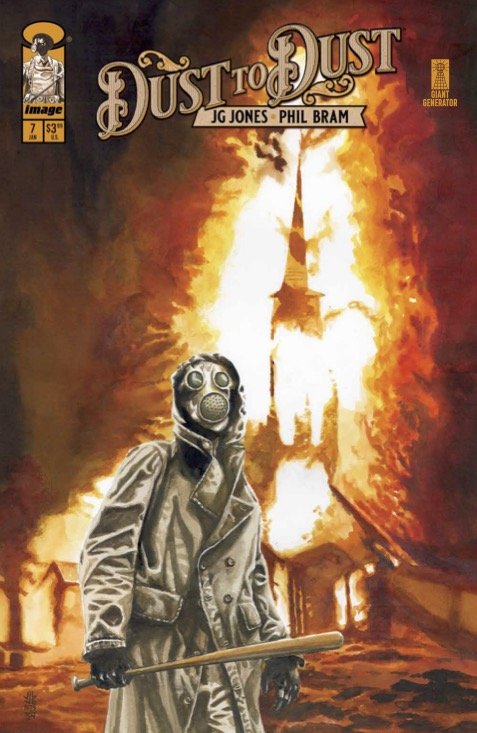
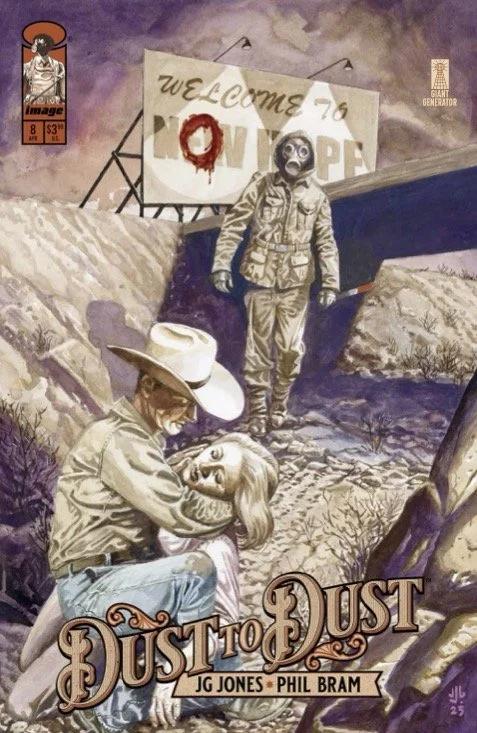
It’s an awful sight. It’s a goddamned abattoir in the barn. Flies are crawling all over human corpses. Cracks and booms can be heard off in the distance. It’s the church. The church is burning. None of it makes a whole lot of sense. There’s trouble in town that might just have something to do with the figure in the gas mask who has been lurking around. Things continue to unravel in Dust to Dust #8. Writer Phil Bram and writer/artist J.G. Jones conclude their horrifying tale of incidents in the tiny town of New Hope during the Great Depression.

It takes a while to get the fire out. People working on the fire found something out back. There are a couple of bodies out back. They’re going to need to do a couple of autopsies on those bodies. Hard to imagine why, though. It’s clear that both of the people in question were killed. There are a lot of questions, though. It’s possible that a pair of autopsies could clear-up some of the mystery of what’s gone on in New Hope. There’s a body hanging from the sign wecloming travelers into town. A couple of people see it driving into town. They’re about to be attacked by the guy in the mask...
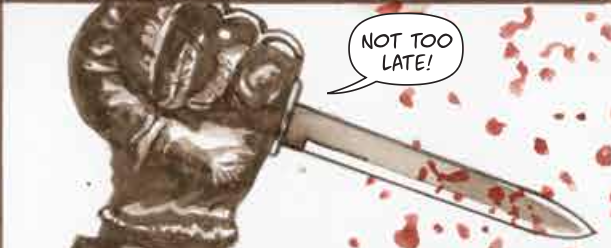
It feels as though plot elements are being rushed through a bit as the series reaches its conclusion. The sweeping gravity of the finale really should be enough to make the final issue work without all of the additional ornamentation in and around the edges of the story as we see townsfolk reacting to events that have happened in a few of the recent issues leading-in to the big finale. That being said, it IS a satisfying conclusion to a series that’s been unique and distinctive.
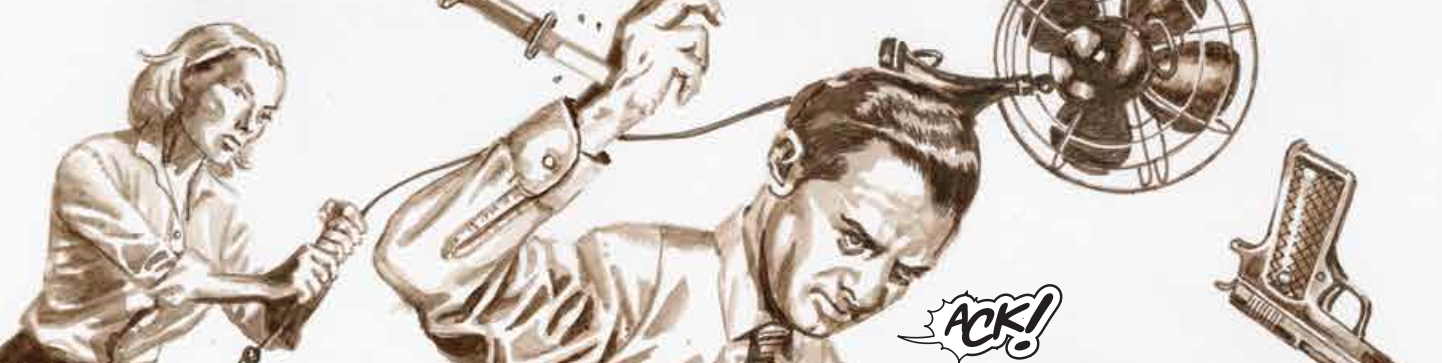
The sepia tone artwork continues to feel quite authentic as the series draws to a close. That being said...it feels a bit awkward and posed. The action that’s conjured to the page feels stiff...except for those few panels that make-up the climax of the story. The visual effect IS interesting, but it lacks the haunting resonance of the high resolution photography of the FSA Dust Bowl photography that was so vividly haunting. The low-res effect of Jones’ art doesn’t quite capture the full detail of the historical setting that serves as the background for the series.

Though the specifics of the aesthetics of the series might be something that could be equipped over, the overall effect of the series remains really impressive. It's clever experimentation that continues to show the wide ranging potential of a medium that never really gets full credit for being just as versatile as it is. That's always nice to see that versatility make it to the page in a compelling format. Dust to Dust comes really close to being something more than an interesting experiment with style and tone, though. It falls a little short of the genius that it could have been.