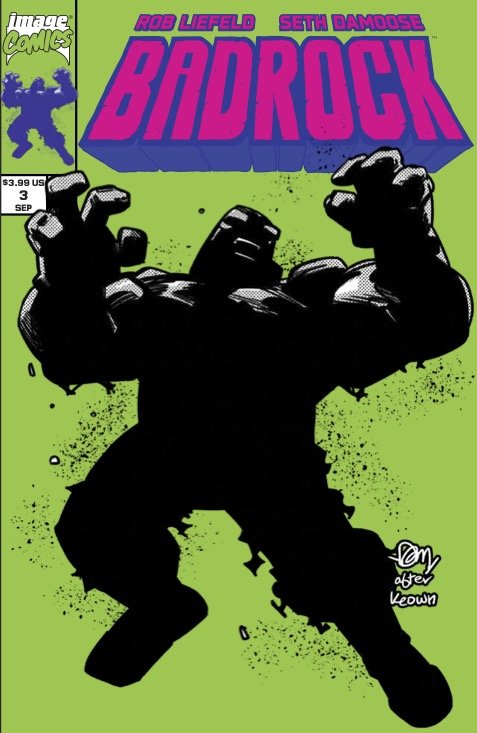
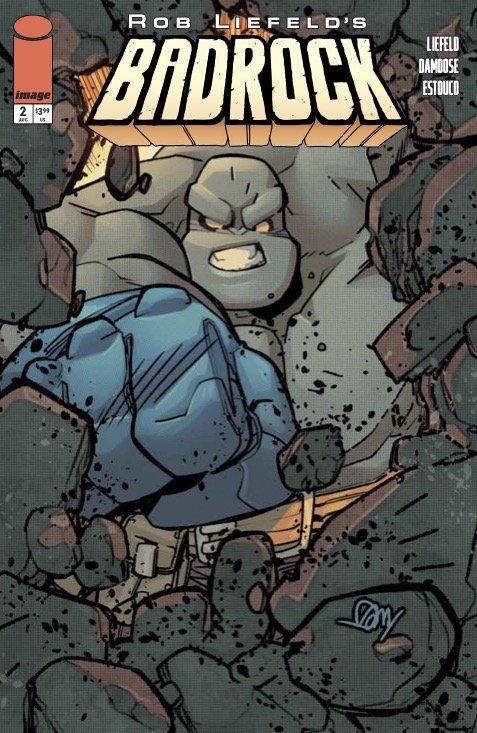
Badrock #2 // Review
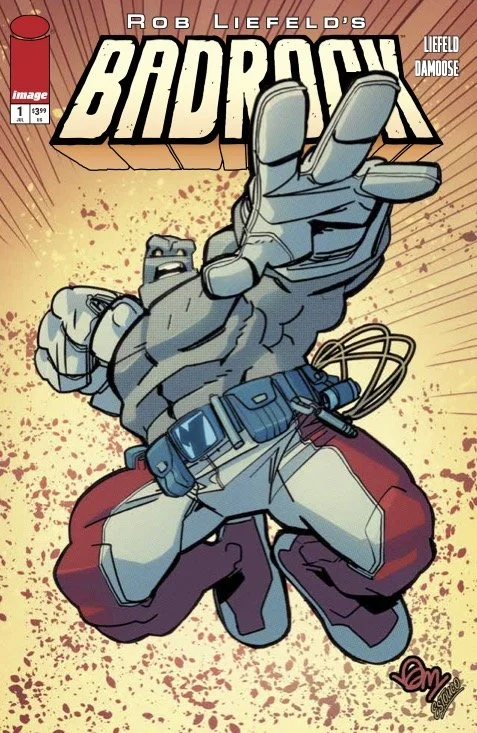
“This sucks.” That’s his reaction to being human. It’s not like he hadn’t been human before. He grew-up human. It wasn’t a good experience, though. He was much happier as a big, hulking monster tath could do superhuman things. He was much happier as a hero with superhuman powers. Now he’s been reverted to being a normal. guy again. He’s going to have to do something about it in Badrock #2. Writer Rob Liefeld continues a story with artist Seth Damoose and colorist Pedro Estouco. Though there IS a bit of heart to the issue, it fails to frame anything terribly new.
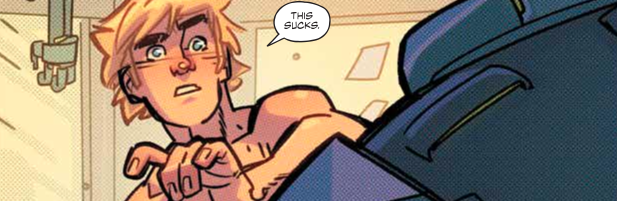
They’ve robbed him of his powers. Now he’s going to have to find a way away from danger. He’s in a high-tech facility with some pretty intense tech, but all the armaments in the world aren’t going to help him out if he’s having difficulty adjusting to a body that he hasn’t been in for many years. He’s going to need to find a way back into the body that he’s grown to love if he’s going to be able to face the world again. It’s not going to be easy, though. He’s going to have to risk his life to get it back.

Liefeld is clearly working with some interesting thematic ballances in a story that really DOES have potential to explore the nature of things like body dysmorphia and body identity and...I mean there are even aspects of gender identity that are kind of touched on by the nature of the fact that this guy identifies as a big rock of a human being more than he does as a human being. It could be interesting stuff, but Liefeld doesn’t really do much with it aside from the basic mechanics of superhuman transformation that might not be for everyone...
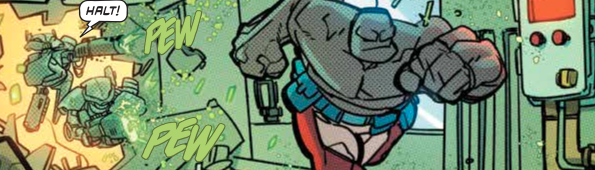
The more sophisticated ends of the drama of the story might go completelly unnoticed if it weren’t for the fact that the art team does such a good job of rendering the human element of the story. Liefeld’s script might feel like a lot of wasted potential, but Damoose manages to bring out some of the genuine emotion in the story that elevates it beyond a silly Ben Grimm-adjacent action story set in a high tech facility. The genuine human emotion hits the page with added heart thanks to the careful color work of. Estouco, who also manages to deliver depth and luminosity to the page in a way that feels respectably immersive.

Everything's there. It's entirely possible that this thing could have been developed into something that would be much more appealing on a much more sophisticated level as it is, the action seems to be the central focus of it all. And the nature of that feels a bit muted. Had Liefeld chosen to explore the transformation in a bit more detail and the psychology of the title character, it might have turned into something more than what makes it to the page.