The Terminator Metal #3 // Review
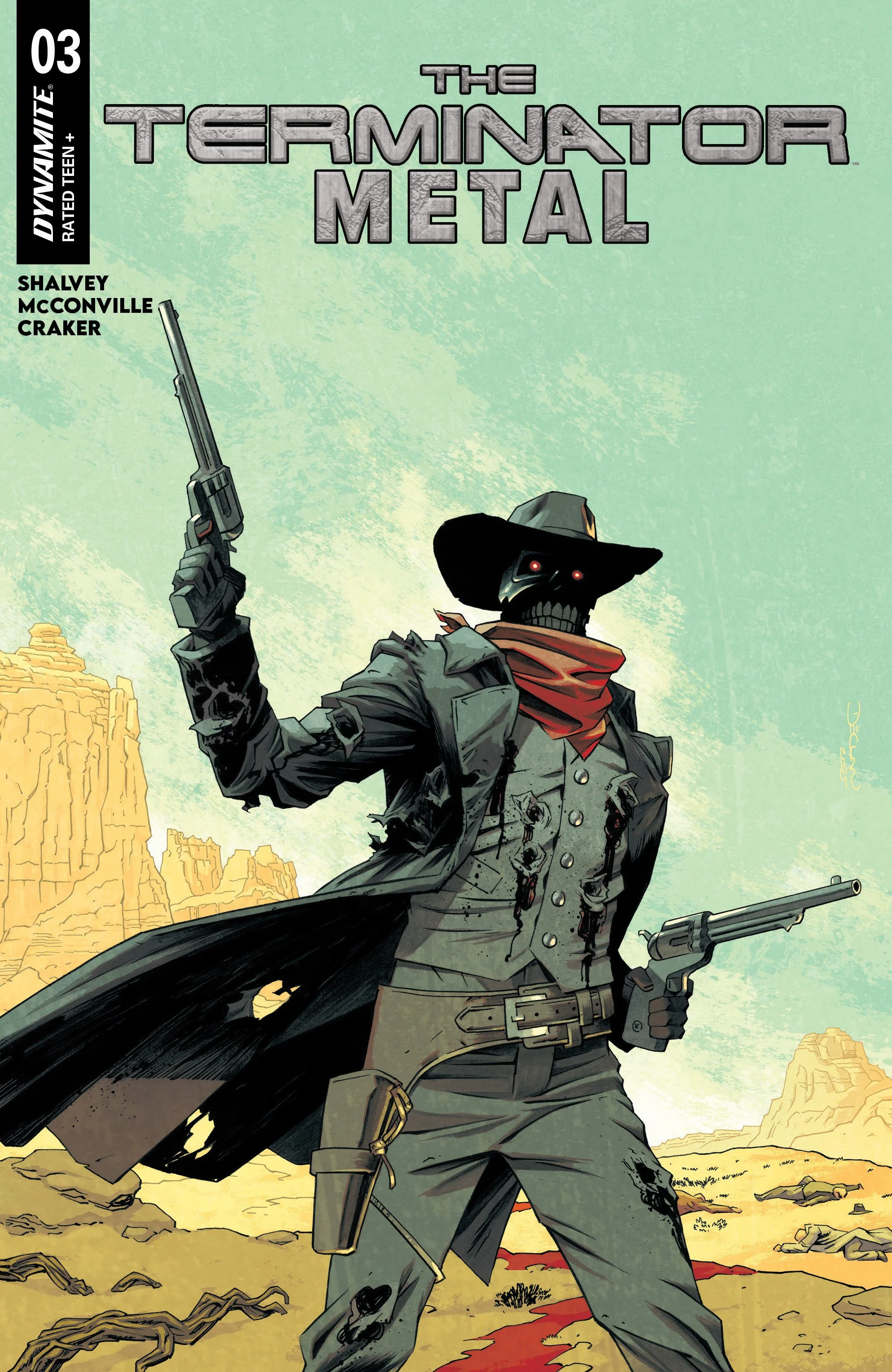
There’s a T-800 unit that’s been sent into the past. Might have arrived just a bit early considering that’s it’s made it to the Blue Mountains of Oregon in 1889. Not exactly a time or place of a whoel lot of energy, so it’s going to ned to conserve energy in The Terminator Metal #3. The writing team of Declan Shalvey and Rory McConville render a very tightly- constructed one-shot story with artist/colorist Colin Craker. A T-800 unit on the frontier in the northwest in lat 19th century? There’s really no specific reason why an idea like that should work at all, but Shalvey, McConville and Craker make it a lot of fun.
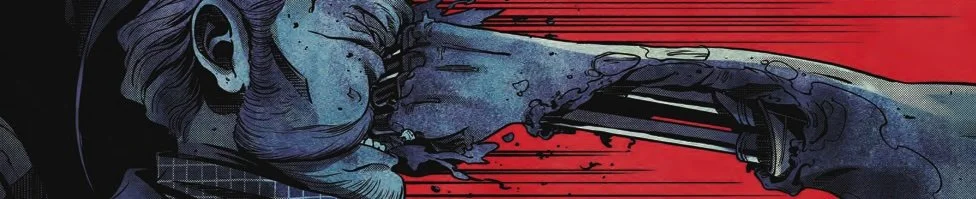
Theoretically, the T-800 unit should be able to find a place to go into some sort of standby mode for a little less than a century until such time as it’s ready to go to hit its target. The problem is that there are people around who just might think that it’s some kind of threat. And it’s already in very low power, so it’s going to need to find SOME source of power. As luck would have it, there’s an electrical power plant opening not far from the terminator unit’s current location...
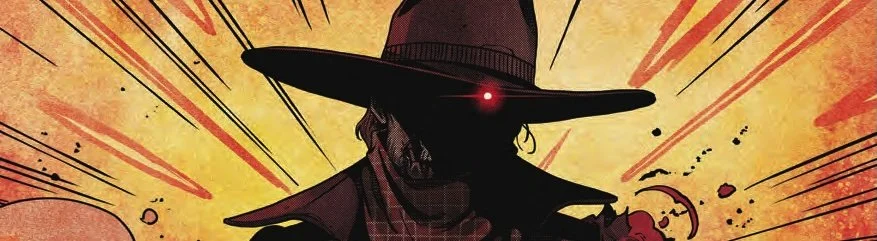
Shalvey and McConville set up a very simple premise that is very easy to follow. The constant reading of power percentages is bizarrely relatable for anyone with portable devices that require a constant recharge in places of limited access to electrical outlets. Right away the terminator unit is oddly sympathetic. It's closer to contemporary time than the era it finds itself in. So there's a kinship there as well. As a reader, one just really hopes that determinator is able to plug in before it has to shut down. Grantd: it IS a killing machine and an AI, but everyone deserves to e at 100% power...
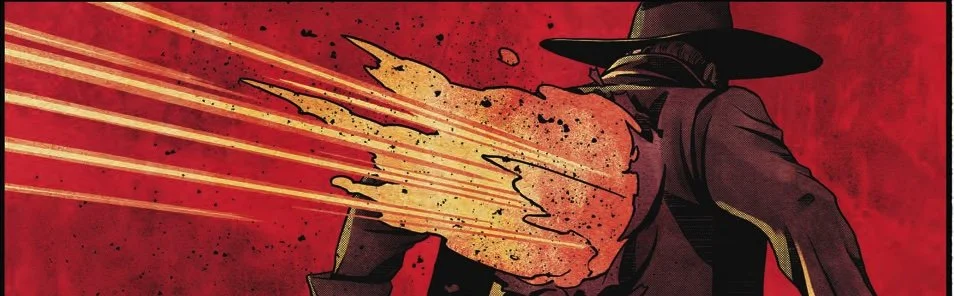
Craker solidly set the late 19th century. Of the peace. The field of the frontier is definitely there and some beautiful establishing shots. The visual appeal of a terminator unit in that era causes to mind steam punk imagery that actually feels a little bit closer to the design of a T-600 then actual design of humanoid robots has been lately. So the look of an old Terminator really feels like it fits in that era. Sort of a robot desperado sort of a visual feel. There's a definite outlaw on the run feeling about the story that works particularly well visually.

There are a lot of different errors that one could place a terminator unit in that would benefit from a story like this. Thankfully, they're specifically placing it in the old west. It's nice to see a frontier story that doesn't necessarily feature cliché imagery. And the particularly tweak and shift that makes it science fiction. Horror happens to fit remarkably well into the frontier genre. It's really a remarkably well articulated fusion of a few different popular genres.