The Voice Said Kill #4 // Review
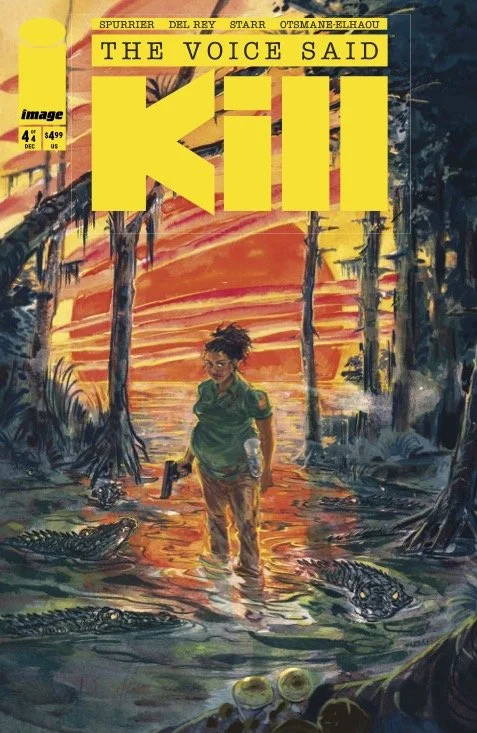
The Louisiana bayou. A group of people are approaching what appears to be a cookout. Kind of strange to have something like that going on, but it’s difficult to tell with these folk. The people who have come upon the late night cookout are looking for medical supplies. They can pay. Things are tense. Guns are drawn. Things get ugly in The Voice Said Kill #4. Writer Si Spurrier and artist Vanesa Del Rey conclude their survival drama with a very tense final chapter. Color comes to the page courtesy of John Starr. There’s a great deal of darkness overpowering everything in the series, but Spurrier and Del Rey manage something beyond that darkness in the final chapter.
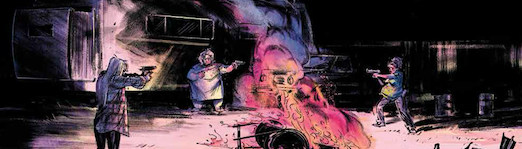
It's not like the guns get drawn out of nowhere. There is certainly a great deal of tension between the two groups. There really is no questioning that. It's really only a matter of time. And then triggers get pulled in the guns get fired and things get kind of crazy. Naturally, it's going to end with just a few people pointing guns at each other. There's going to be a need for some kind of negotiation. Invariably that negotiation is going to involve some very uneasy and uncomfortable decisions.
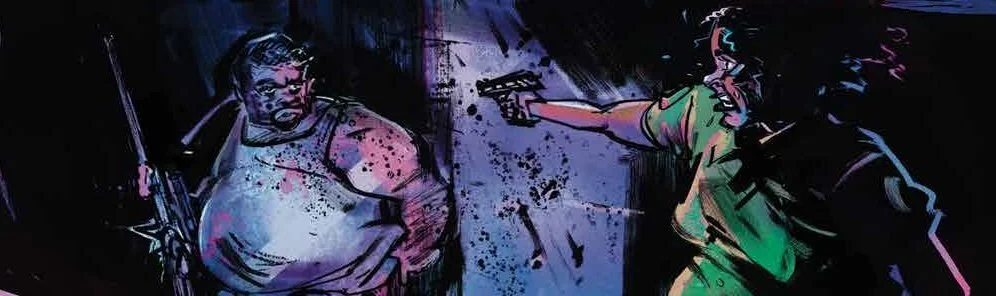
Spurrier is definitely moving into allegorical ground with some of the central elements of the story. The mother-to-be who is a park ranger makes an important decision. There’s negotiations at gunpoint which seem to say a hell of a lot about the nature of business and commerce in the modern world. Life seems incredibly cheap on the fringes of society as it all moves and maneuvers towards its inevitable end. There’s some kind of life on the horizon of it all that just might offer some kind of hope beyond the overpowering vortex of human need. It’s powerful stuff.
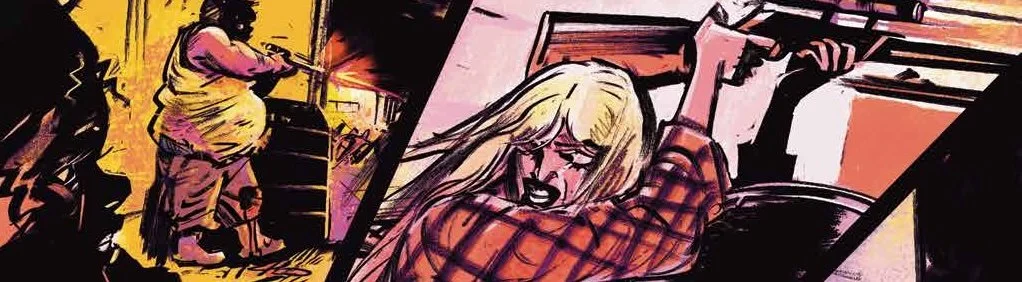
Del Rey keeps the visuals as dark as Spurrier’s script. There’s a scratchiness to her inks that suggest a kind of restlessly organic energy that isn’t afraid to look into the sheer ugliness of a decaying American dream. Though there is some exaggeration in her rendering, it’s expressing a kind of squalor that feels like it’s riding the edge of the end of everything...not just the series. Starr’s colors are poured-in around the edges of Del Rey’s inks. It all feels so bleak. Thankfully, Del Rey follows Spurrier’s lead in delivering the moments of hope into the shadowy darkness that dominate that visual world at the end of the series.
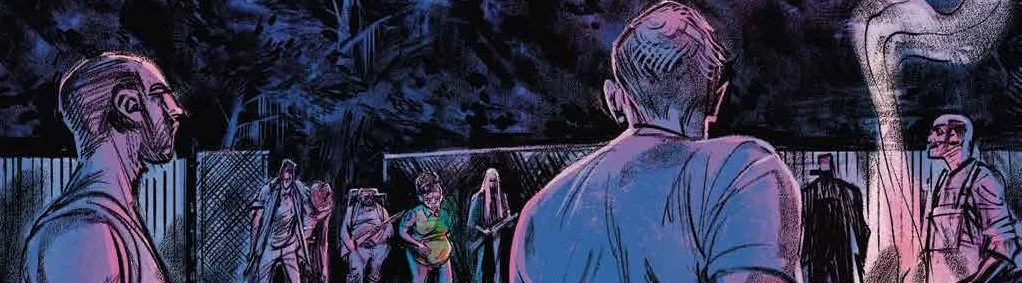
It’s been a long journey through four issues. Some of the action has had the tendency to feel a little too heavy to carry much of a plot. Spurrier, Del Rey and Starr have found a pulse to the series which catches-up with the overall gravity of the story’s darkness by the end of the final issue. It all feels remarkably vivid as it crawls through the nightmare to get to the final resolution at the end of it all.