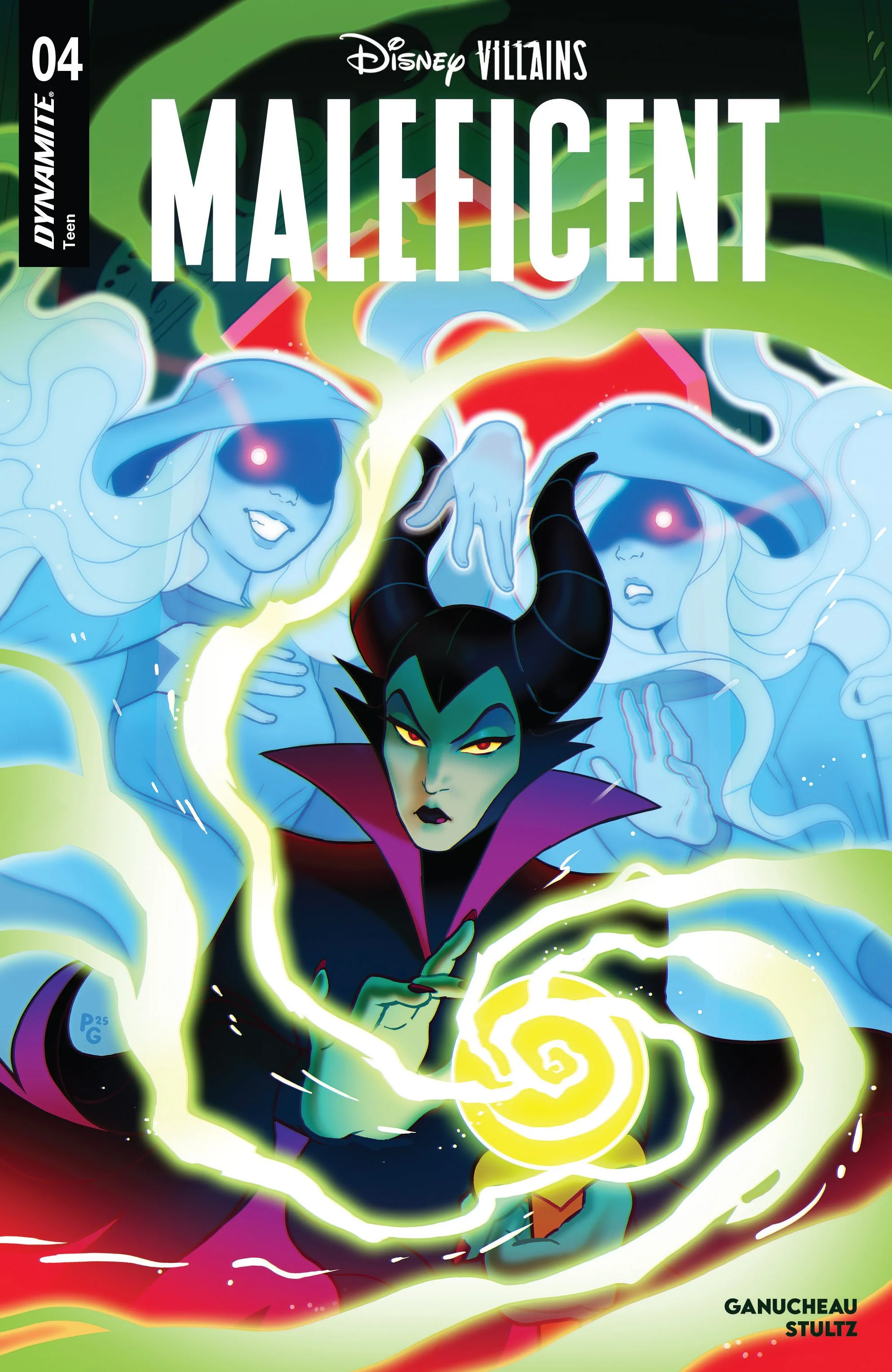
Maleficent #4 // Review
The self-proclaimed Mistress of All Evil is seeking to secure her power. In order to do so, she’s going to need something very, very powerful: she’s going to need the tears of a dragon. The reanimated skeleton doesn’t have any difficulty finding her a dragon deep within a castle. The problem is: precisely how DOES one make a dragon cry? The Mistress of All Evil is posed with this latest problem in Maleficent #4. Writer Paulina Ganuchaeu reaches the penultimate chapter in her five-part series with artist Theo Stultz. It’s a fun, little fantasy chapter which gracefully glides across the pages.
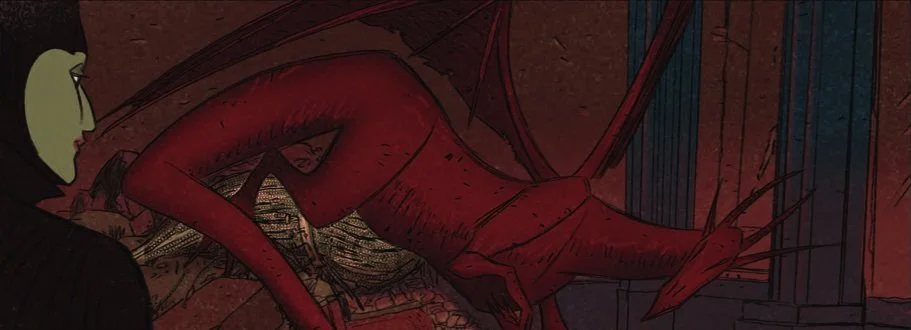
The door swings open to reveal a small dragon. (Of course...even a small dragon is imposingly large.) The small dragon doesn’t exactly rest atop treasure. It’s resting atop wreckage and rubble. Observant eyes might notice a throne-room-style chair and a fallen pillar amidst the rubble. Malificent is going to be able to bind the dragon right away with the aid of those she has brought with her. From there, it’s going to be a bit of a challenge. Making a dragon cry is going to require the right kind of insight into its psyche...
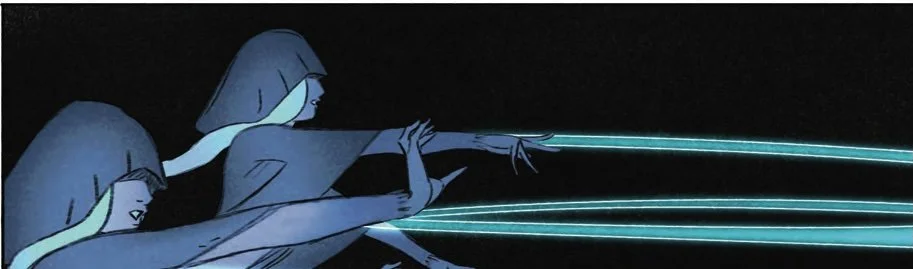
Ganucheau cleverly outlines a quick fantasy/drama encounter between magic user and magic creature. There’s a brilliantly stark simplicity about the encounter that delivers a tremendous amount of depth to the page with very, very little in the way of dialogue or backstory. Ganucheau’s writing is ingeniously minimalist. All too often, fantasy over-encumbers adventurers with long-winded renderings of realm and lore in order to get them through a door and on to the next encounter. (I blame Tolkien.) What Ganucheau manages with Maleficent allows the reader’s imagination to serve as the background for a simple drama that craftily glides from panel to panel in delicate shadow.
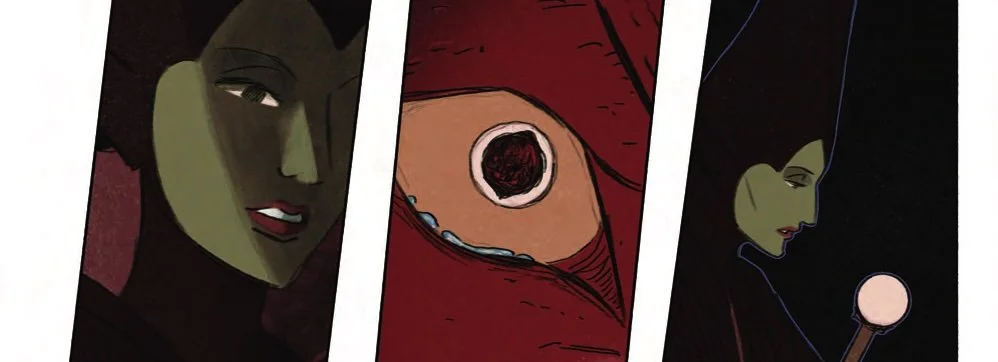
Stultz’s art is perfectly matched with Ganucheau’s writing style. There’s a deliciously sketchy quality to it that visually engages the reader in exactly the same way that the writer’s script engages the imagination. There’s just. enough line, form, color and shadow to play with the reader’s visual imagination. It might lack a certain minimalist perfection, but it definitely errs on the side of the reader’s imagination...allowing it to fill-out the details in the corners of every panel. Above all, it’s all framed quite well with action and drama alternating between large-scale wide-shots to nuanced and intricate close-ups.
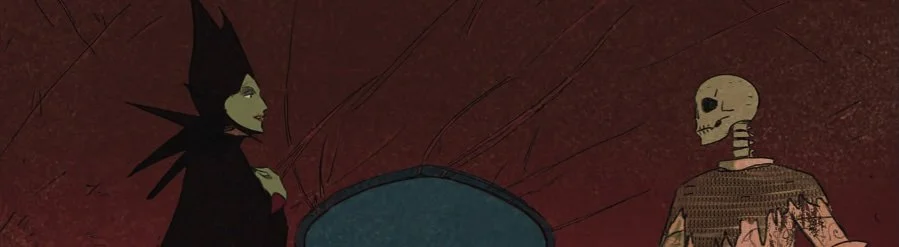
There’s a bit of a paradox about Ganuchaue’s style of storytelling with respect to this script. It’s so cleverly minimal that it ends-up haunting the corners of the imagination between issues. It’s the type of wrriting that has almost a subliminal effect on the imagination. Get to the end of the penultimate issue and it feels like this particular story has just...always been there. As a result, it feels more than a bit bittersweet that it’s all about to be over at the end of another issue.