Thundarr the Barbarian #1 // Review
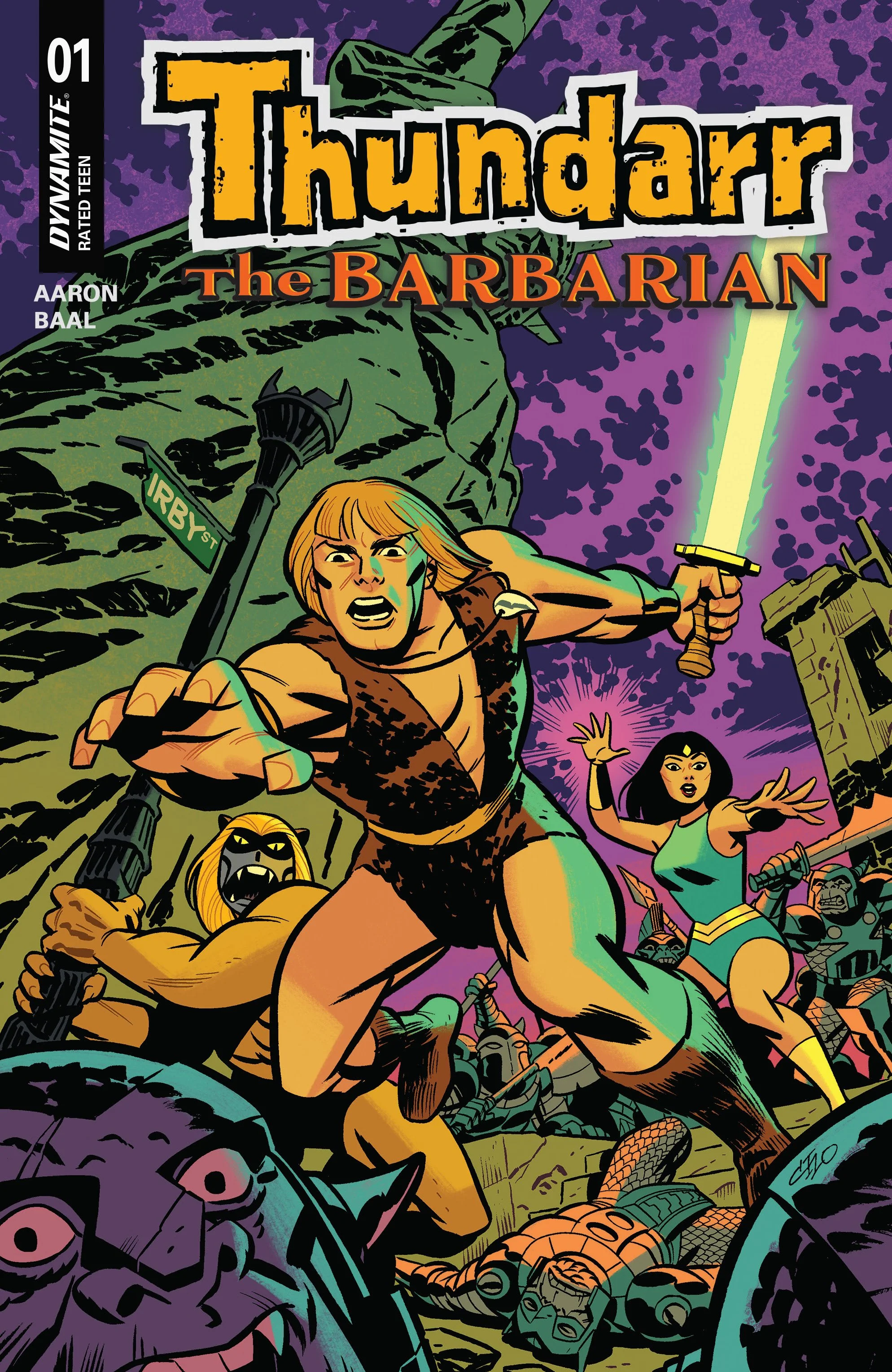
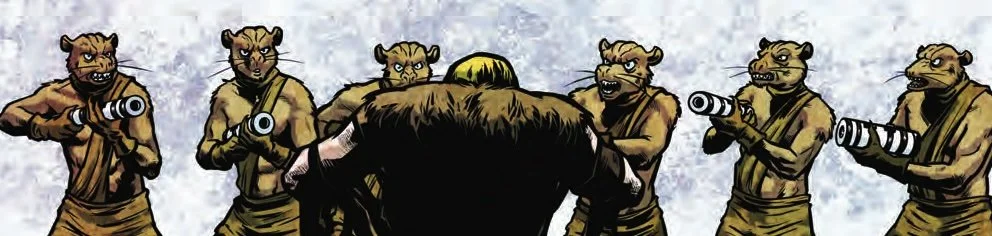
It’s a little over 2,000 years from now. A major city that looks suspiciously like Chicago is nearly completely iced-over. There are humans for sale. They were caught wild in the ruins of the windless city. The Carocs bid two sack of Death Flower Pollen. The Raiders of the Abyss bid three drops of the Vapors of Life. The Man-Apes bid the mildly-rotted carcass of a full-grown grizzly snake. Then a bunch of rats show-up on motorcycles offering death to ny that oppose them in Thundarr the Barbarian #1. Writer Jason Aaron and artist Kewber Baal launch a whole new revival of the old property with colorist Jorge Sutil.
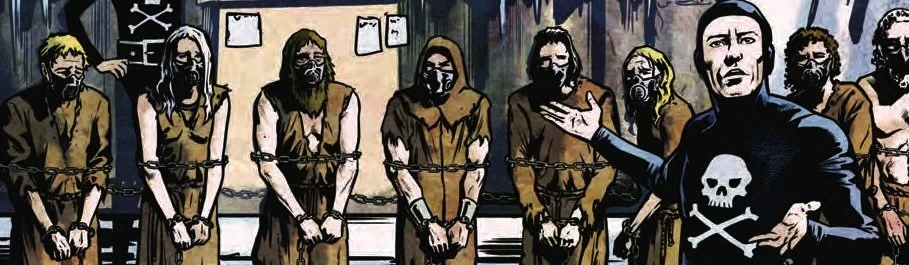
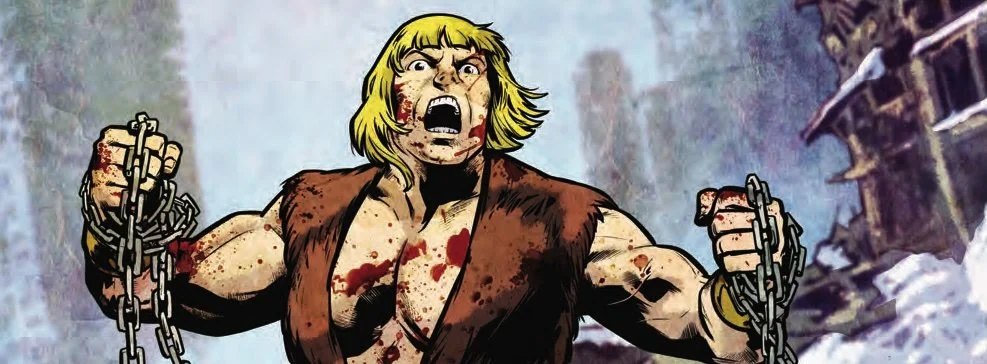
The groundling rats on motorcycle understand that business isn’t conducted by threat. Really...they’re just being dramatic. They actually HAVE something to bid: a crate of pristine laser rods. That’s far more than enough to outbid anyone else. On closer inspection, one of the human slaves in question is laking an arm. That’s scarcely the type of thing that would be worth what they’re bidding. So naturally they decide to beat the one-arm around a little bit...until one of the slaves rises-up and nearly beats the rat slaver to death. He’s soon brought back into submission, but his luck will change. His name..is Thundarr.
Aaron takes a dark fantasy concept and supercharges it with some traditional dark fantasy tropes that wouldn’t have been capable of quite the same impact on a made-for-TV Saturday morning cartoon in the early 1980s. The bleakness of the world created for that series is given greater intensity in an opening chapter that gives the title character the added dramatic weight of a tragic backstory. There’s a very sinister heart to it all that gives the series a pleasantly foreboding pulse.
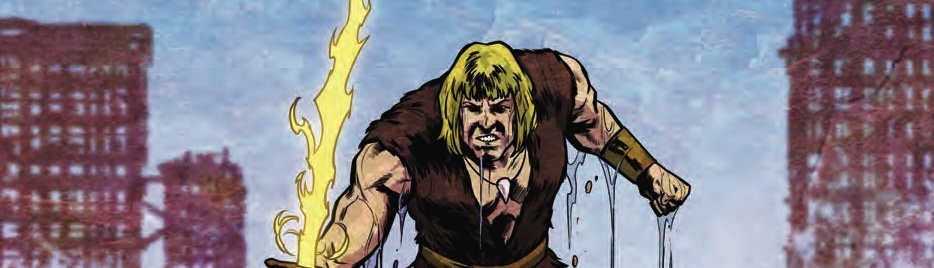
The original animate series features a strange fusion of art and design styles. Legendary comic artist Jack Kirby and the well-respected Alex Toth mingled styles in a cel animated Saturday morning series. Baal adds depth and dimension to the world created by Kirby and Toth. Sutil’s colors lend the post-apocalyptic wasteland an added sense of decay that serves to amplify the overall atmosphere of the series considerably. The overall package feels exactly like it should: higher resolution world of greater darkness and nuance than would have been attainable on ABC Saturday mornings back int the early 1980s.
It’s too bad that Thundarr creator Steve Gerber doesn’t get any credit in the front of the book for having developed the overall idea. Neither do Kirby or Toth. And...for that matter neither does original producer Ruby-Spears. There really isn’t any reference at all to the fact that this whole things had been a 21-episode animated series that had served as the origin of this first issue, which is a bit strange. It’s such an obscure bit of history, though, given how short-lived it was. It’s got such a distinctive place in pop cultural obscurity, though. It’s doubtful that anyone picking-up the comic book wouldn’t already have been familiar with the old cartoon.