White Sky #7 // Review
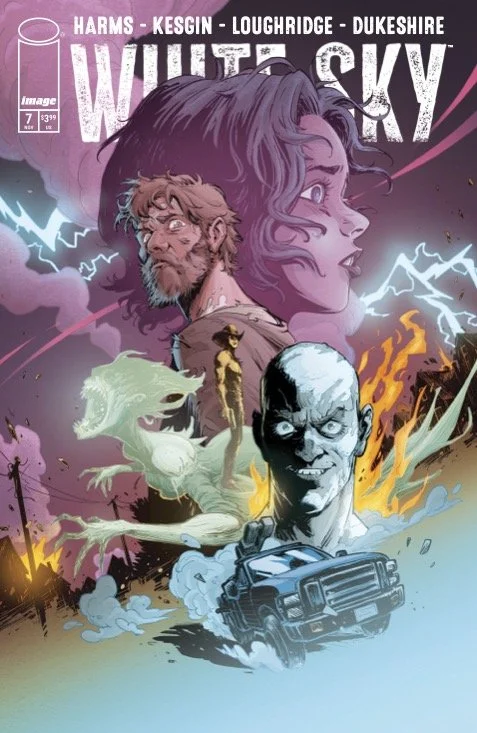
There was a point at which it all started. A point when a father and a daughter wee simply trying to figure out what had happened and why it had all changed in the dreamy spectral ghost apocalypse that the world had slipped into in White Sky #7. Writer William Harms, artist Sümeyye Kesgin and color artist Lee Loughridge take a look back to where it all began for Violet and David. Having come quite a distance into the substance of the conflict, the creative team takes a look back at the origin of the whole series. Thankfully, there isn't any long or exhaustive backstory to have to wait through. It's just the drama.
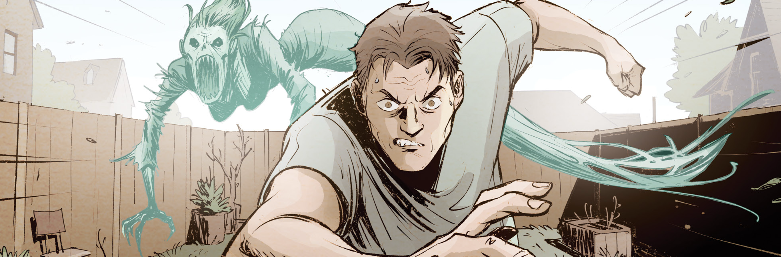
Mount Shasta. Five years ago. David is working on something in the bacl yard when his wife comes by to tell him that there isn’t much time. This would be perfectly natural if it wasn’t for the case that his wife’s dead. The ghostly image of his wife appears and he’s in shock. It doesn't take long. He gathers up Violet and they make a run for it. They're going to have to learn a lot of things if they're going to be able to survive. It's a whole different world out there.
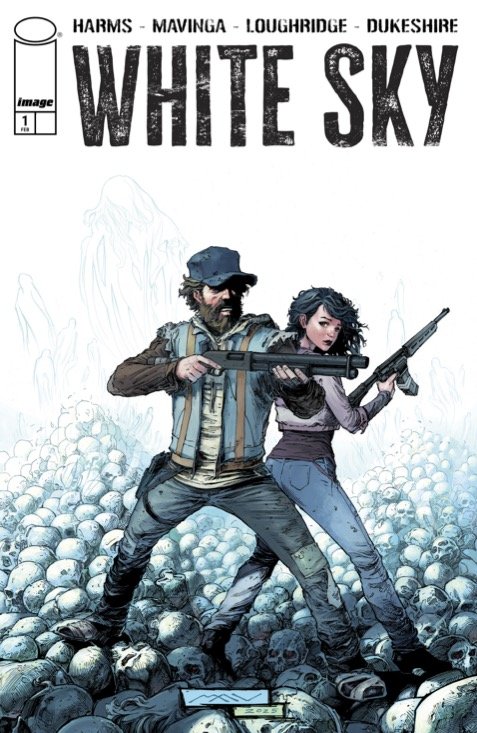
In the midst of all of the superhumans and ultra capable action stars that inhabit most of the comic books on the current issues, it's really nice to see a story that features perfectly ordinary people truly thrust into extraordinary situations in a post apocalyptic world. Harms does an excellent job of delivering that to the page. And the post apocalypse that he is delivering to the page does feel distinctly new. It's a natural progression from the zombie apocalypse trope, and it feels a lot more grounded in emotional reality than...for instance...Kirkman’s Romero-inspired work.
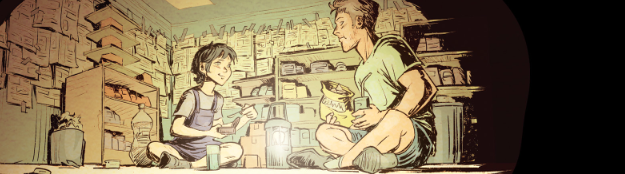
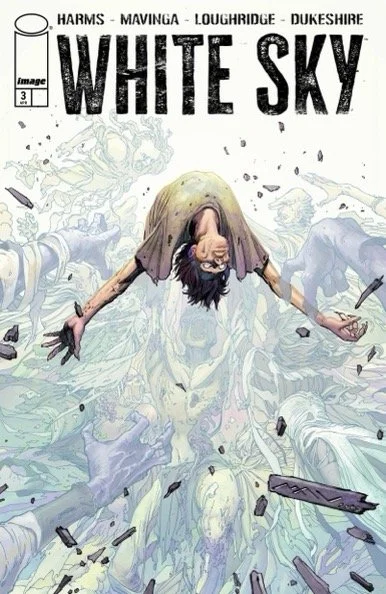
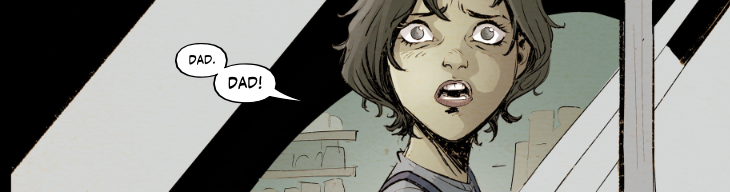
The visuals continue to be hauntingly good. Kesgin’s tense, expressive line work are lifted into a creepy, emotionally engaging etherial realm by Loughridge’s eerie, washed-out palette. It's a challenge to try to ground something in a very real emotional reality that happens to have a whole lot of monstrous ghosts lurking around the edges of everything. Thankfully, however, the art team is certainly up to the job. They do remarkable work in firmly, grounding the central core of the story in a very real emotional reality. It all hits the page with such compelling force.
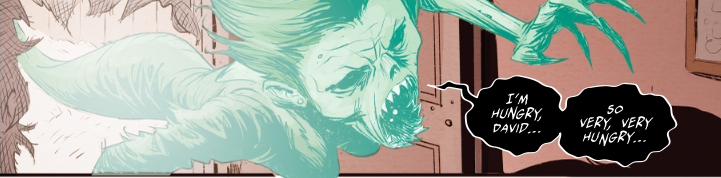
A legend is that Dan Aykroyd's original concept forGhostbusters was set in New York in the far future. Not every deaf may result in a ghost, however, as populations rise and more and more people die, ghost just end up lurking around everywhere. So there are ghost exterminators that routinely get hired to do the work necessary to pacify the supernatural. It's a clever idea. Armies of the undead tend to be more fantasy based. The idea of a large manifestation of a whole bunch of ghosts as a force of nature is much more interesting. Harms’ basic premise here is quite compelling.