White Sky #4 // Review
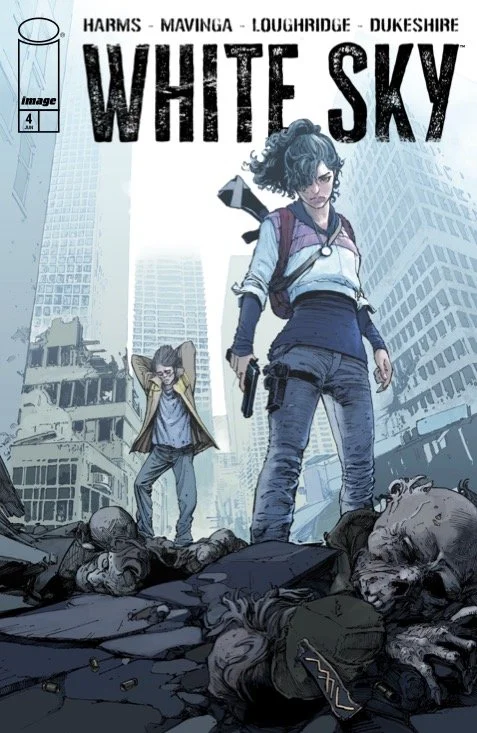
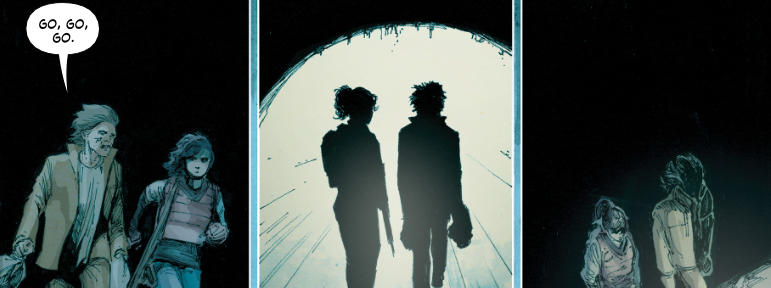
Violet is following Walter into a cathedral. He calls it a cathedral. It’s like a church. With stalactites. And ghosts. And the ghosts are singing. He tells her not to look. He tells her not to listen. Just keep walking forward. And they do. Until they reach daylight on the other side of the cathedral. It’s a simple walk but it seems to take a lot out of them as they journey into the heart of White Sky #4. Writer William Harms continues a journey into a ghostly post-apocalyptic wasteland with artist J.P. Mavinga and colorist Lee Loughrdge.
Meanwhile, Violet’s father David is being held prisoner in Pleasanton...but they’re ready to let him out in leg irons. There’s work to be done and he’s one of those who is expected to do the work in question. The rules are simple. If you don’t work, you get shot. If you run, you get shot. If you’re a pain in the ass, you get shot. Sounds pretty clear. And it’s pretty c lear that it’s going to be very, very brutal work. The work is simple: move a whole bunch of stuff back in front of the fence. The faster they work, the quicker they can retreat back to the safety of their cells.
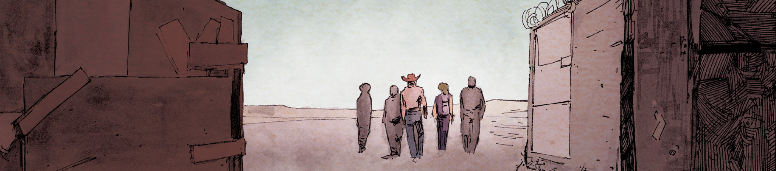
It's a brutal series of scenes. And not always physically. There's danger in the periphery of what's going on. But it's more subtle than it is dynamatic. And there is the overall feeling of for looking around the edges of the panels. Clearly things have not been well for quite some time. Harms lets the oppressive nature of a world in torpor stretch out across the page with an oppressive gravity. The slow pacing of the plot allows the horror to gradually assert itself as the pages turn from cover to cover.
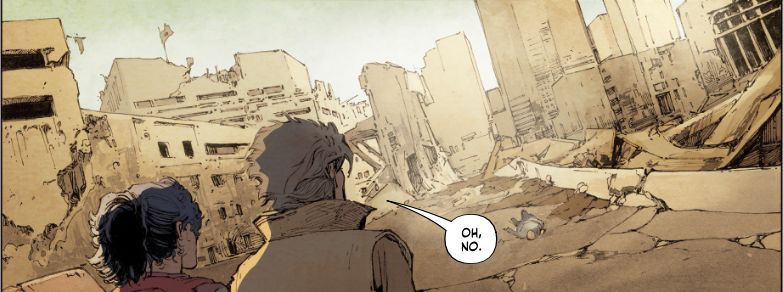
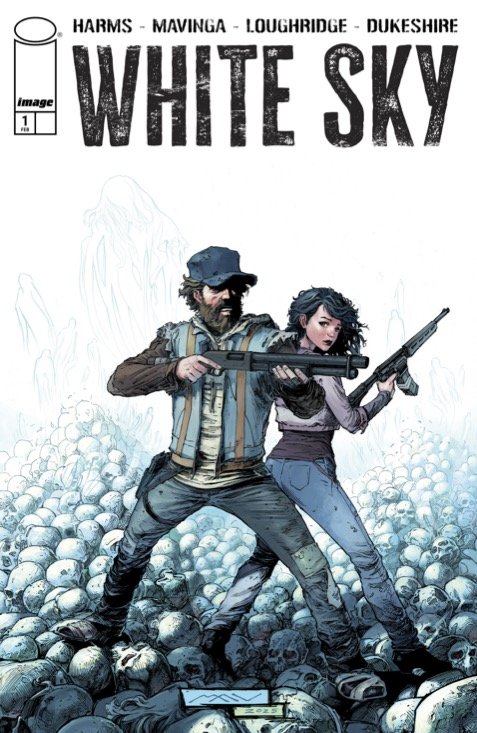
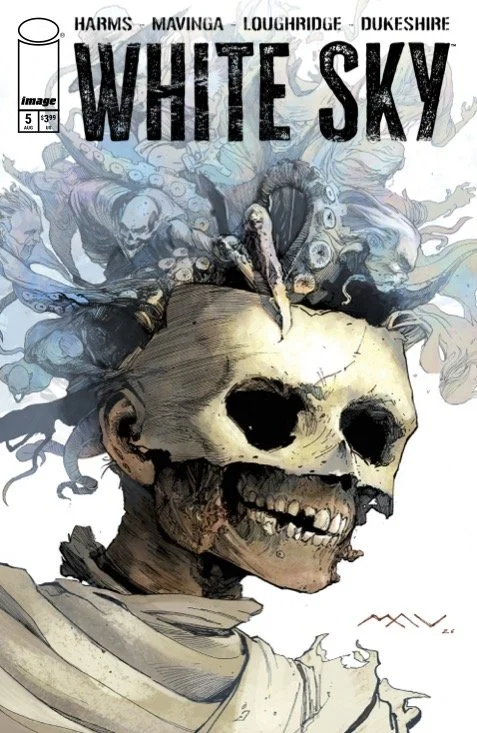
Once again, Mavinga finds plenty of space for wide-open stretches of post-apocalyptic oblivion. It’s a big city, but civilization has come and gone, leaving only the ghosts of office towers punctuated by broken-down shells of vehicles and the occasional hanging corpse that slowly swings in the breeze. At the heart of it all are the survivors: VIolet is trying to keep Walter together and her father David is just trying to survive forced labor. Mavinga’s line work is scratchy, sketchy and ragged in places, allowing for Loughridge’s painstakingly washed-out color and shadow to drape its way across the page.
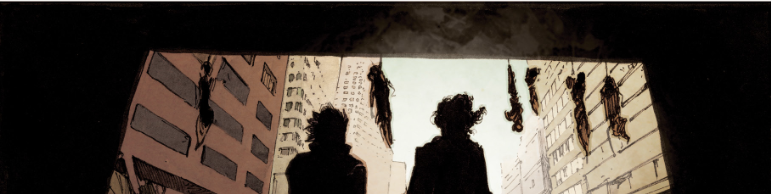
White Sky deliciously delivers a long look at a post-apocalyptic desert and the earthbound ghosts that still haunt it...living and dead. The horror clings to the edges. There isn’t a great deal of plot to drag down the overall feeling of desolation that dominates each and every page of the series. It’s a hell of a thing to trudge through, but there IS an overwhelming sense of survival and admiration for the human spirit that comes in the page-by-page journey through an issue of White Sky.