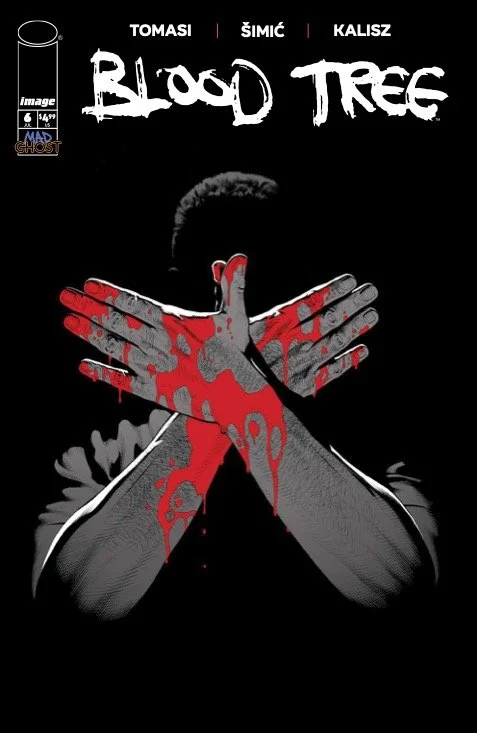
Blood Tree #6 // Review
Detective Azzaro has brought a crowbar to a crime scene. There’s a look of determination on his face. Someone who meant a hell of a lot to him has died in the line of duty. Now, he’s very, very upset and looking for answers in Blood Tree #6. Writer Peter J. Tomasi and artist Maxim Šimić conclude their earthy tough-as-nails crime drama with an aggressive issue featuring a somewhat powerful finale as Azzaro looks to get revenge for the death of Detective Maria Diaz. The Angel Killer’s victims are raining down all over Manhattan. Before the final panel, there’s going to be at least one more to fall...
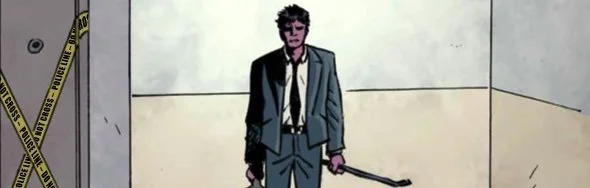
It’s not just the police tape on the door to the apartment that Azzaro has to get through. It’s also the door itself, a pool table, a whole bunch of floorboards, and worst of all: his own frustration. He’s lying shirtless in the rubble of it all when he wakes up, grabs a bottle of water, and goes to work on the walls. As luck would have it, he finds something in the plaster that’s hopefully going to crack the case wide open. The real challenge is only beginning.
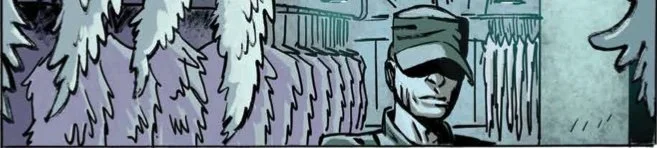
Tomasi plays with homicide detective cliches and stereotypes that have been echoing through crime fiction for nearly a century now. There’s really, truly nothing new here. It IS interesting, however, to see something like this take itself so seriously in a contemporary world of psychological complexity. Tomasi just has a cop who won’t stop off the rails and on the trail of a murderer no one can seem to track down. The fact that it’s fun at all in light of all of the hackneyed cliche really says something about Tomasi’s talent as a writer. One wonders what he might do with an original concept.
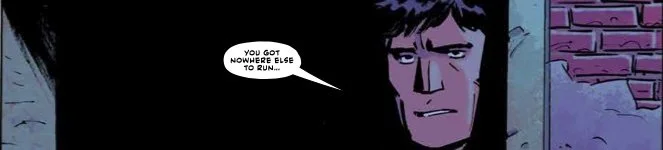
Šimić finds a way of taking crude renderings and making them feel real. They’re amplifying mood, motion, and emotion in a way that seems a bit stronger than straight-ahead realism would allow for. It’s fascinating to see Šimić at work on a story that is so totally grounded in realism...but with strange idiosyncrasies, too. Like when a bunch of people fall to their death wearing wings. That sort of thing. There’s a simplicity about the darker ends of the story, which hit the page in interesting ways that transcend the cliche of it all.
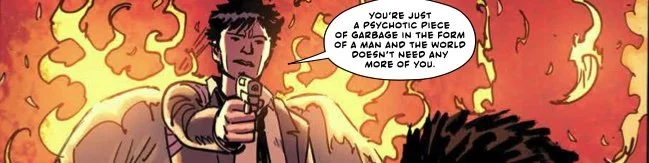
The story ends in an uneasy kind of peace. The final showdown with the killer features fire, rain, and a whole lot of bullets. It’s caught somewhere in between the real and the unreal. It’s not over-the-top darkness like Frank Miller’s Hard Boiled, but it’s scarcely the kind of complex realism that is so very, very rare in police procedural dramas. It’s just...kind of a fun trip into a Silence of the Lambs sort of drama that never quite goes far enough in any direction to register much of an impression.