The Tin Can Society #9 // Review
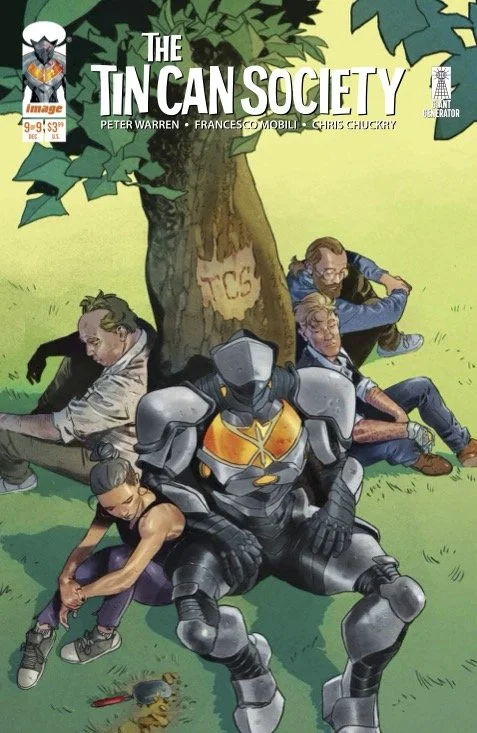
Johnny is being asked a question. “How many times do you have to die before it sticks?” It might seem like a bit of an overly dramatic question, but context is everything. He’s being asked the question while he’s on his knees. At gunpoint. With a room filled with heavily armed men carrying assault rifles. There just might be an answer to the question that’s being posed in The Tin Can Society #9. Writer Peter Warren and artist Francesco Mobil conclude their 9-part mini-series with colorist Chris Chuckry. Warren concludes the story with a focus on the emotional heart of the tale.
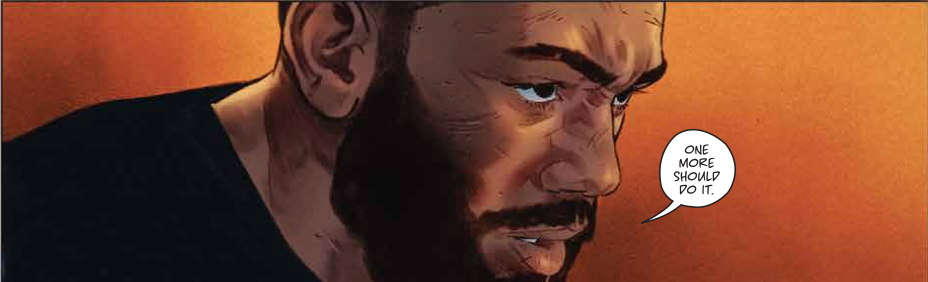
“One more should do it.” These are brave words spoken by Johnny before the trigger is pulled. Then everything explodes in a barrage of gunfire. Arms are assembled in the chaos. To make mattes worse, the entire thing is happening on a vessel out in the middle of an uncomfortably large body of water that involves some rather large mechanized armaments. Shots are fired. Missiles are fired. Lives hang in the balance as it all draws to a conclusion amidst deep reflection on the nature of it all. The heroes will have to pull together some sort of focus if they’re going to be able to survive the end of the series.
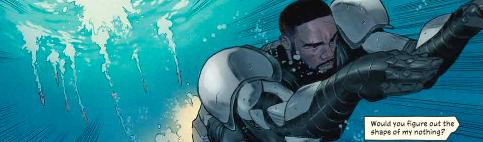
There’s an action trope that’s been used to varying degrees of success over the years. As the big, climactic fight scene gets underway, the hero engages in a philosophical monologue that contrasts against the violence and aggression in a ay that lends it a bit more depth than the traditional action scene. Warren does a little bit more with this...allowing the monologue to run through the entire length of the climactic action sequence and beyond...all the way to the end of the final issue of the series. It’s a bit strange to see an action-oriented issue so totally dominated by the narration boxes. The weird thing is: it works.
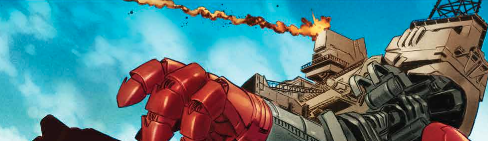
The scripting wouldn’t work nearly so well as it does without the work of some pretty sharp and genius artist. Mobil and Chuckry take the visual end of the action and amp it up with some very sharp framing and dizzyingly well-captured motion. The rush of the action sequence on the page gives the somewhat poetic narrative reflections a place to anchor-into. There’s a cunning balance between the action and the reflection that serves as an admirable conclusion to a largely satisfying series.
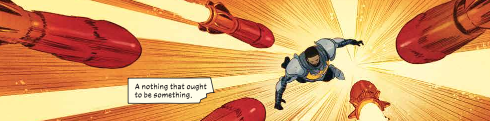
Warrren and co-creator Rick Remender have done an admirable job of extending certain aspects and ideas that had been filtering around the edges of Iron Man-related superhero comics. It’s satisfying to see a story rise and fall in such a short span of time...by design. As Warren states at the end of the issue, he could have gone into a great deal of detail expanding things well beyond the span of the nine-issue series. Thankfully, he let the series run its course with some very sharp scripting.