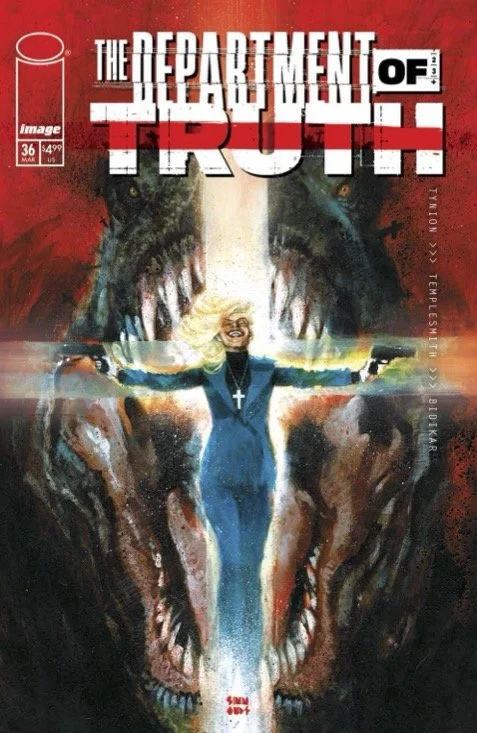
The Department of Truth #36 // Review
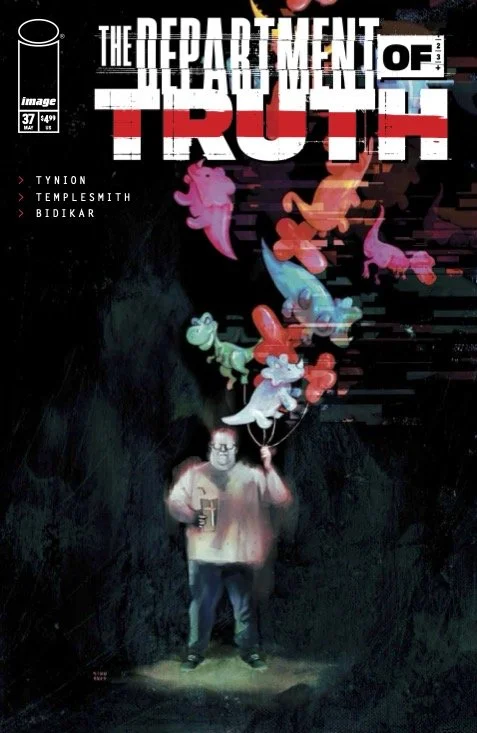
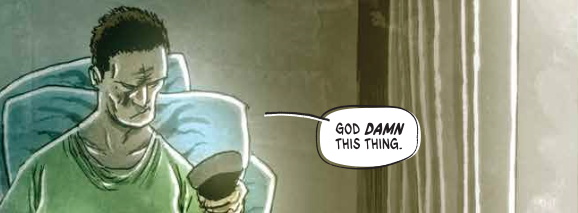
Huck is dying. He’s in the hospital trying to get the goddamned remote to work when he gets a visit. An old co-worker is there to talk with Huck. Whether or not Huck wants to talk, he’s forced to be a bit of a captive audience in The Department of Truth #36. Writer James Tynion IV continues a fun walk through the shadows of pop culture and pop consciousness with artist Ben Templesmith. Once again, Aditya Bidikar’s lettering adds-in a great deal of atmosphere in an issue largely brought to the page through dialogue and narration.
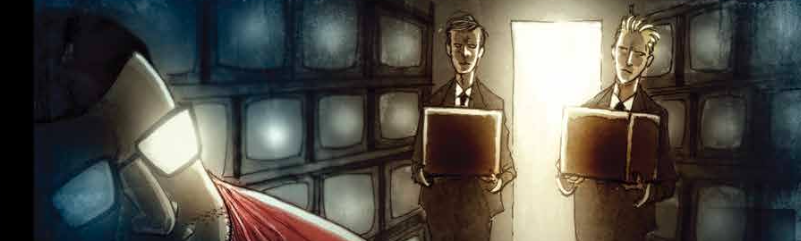
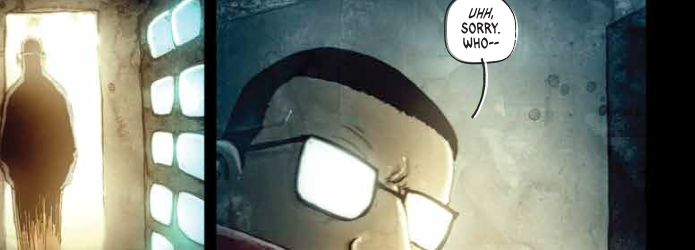
Huck’s son is working for the same people he did. He’s in a facility that’s been lovingly named “rock bottom.” Huck’s son is watching a lot of TV for the employer. Hawk drops by for a visit. He’s not really interested in talking to Huck’s son. he’s interested in delivering a monologue to him. There’s a whole history of media as it pertains to The Department of Truth. Hawk’s been doing the job for a long time. He’s about to tell Huck’s son a little bit about the past. If he’s lucky, he might just learn a few things that might help him on the job.
As much focus as Hawk has had in the course of the series thus far, he’s never really come across as much more than a peripheral detail in the series util the 36th issue. His presence always lended a little bit of color to the periphery, but he never seemed all that interesting until the latest issue. Coverage of war becomes the focus of Hawk’s monologue. It's a fascinating retrospective, given the current state of the FCC and its concerns about coverage of Trump’s war in Iran. The current state of war coverage echoes into shadows of the past in the latest Department of Truth.
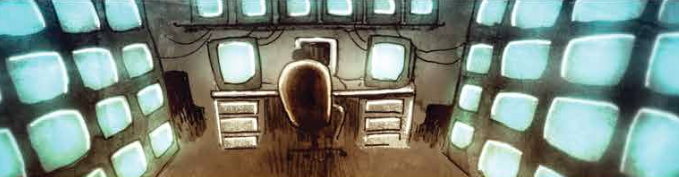
Templesmith does a great deal of work in setting the mood and the tone. So much of what being delivered in the course of the issue takes place in front of a bunch of blank video monitors. The ghost glow of little cathode ray monitors serves as a very symbolic ghostly space with which to discuss the shifting nature of reality, as perceived by people trying to get information out of the mass media. By contrast, the sterile environment of a hospital pet doesn't quite have a kind of antiseptic clean, feeling that it probably should. Nevertheless, the no is carried with a great deal of poise in both of the locations. Bidikar’s lettering aids in establishing a mood. Dialogue is delivered in a very straightforward format. The switched to a.courier-inspired font for the narration adds immeasurably to the mood and tone of the issue.
The publication cycle of these issues would not have allowed for Tynion and company to have been able to predict the clash between the administration and the mass media in a US attack on Iran. It's pretty remarkable that this particular issue has just as things are getting going in that conflict. It's the issuing question ends up being tragically topical.