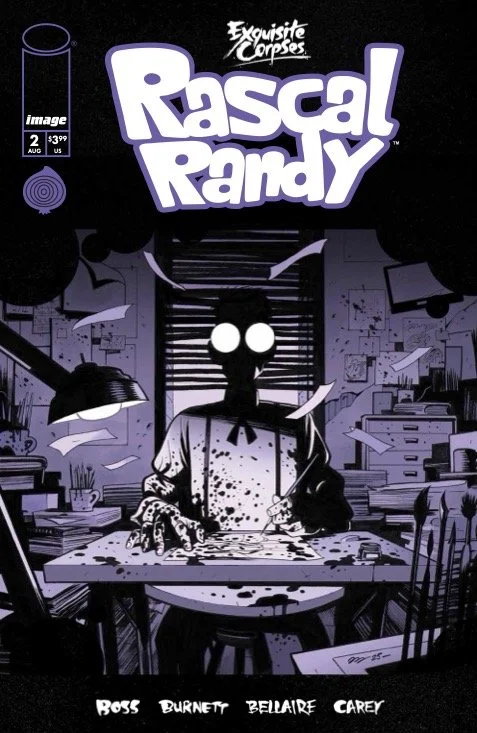
Exquisite Corpses: Rascal Randy #2 // Review
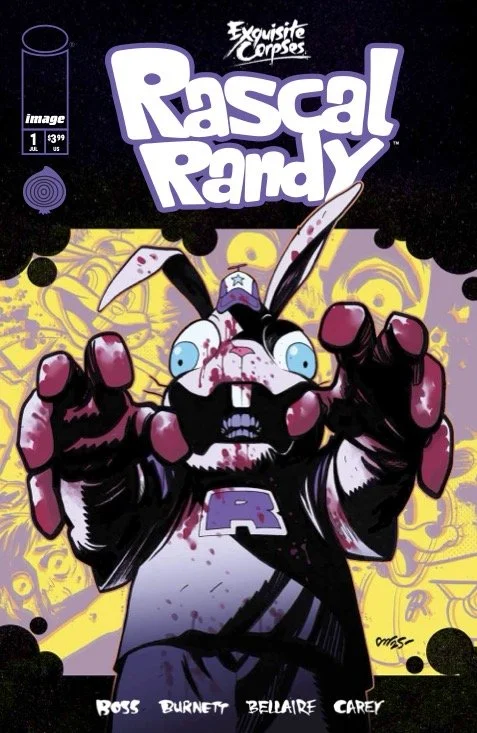
Randy’s coach is upset with him. He swung the bat at a slider. Randy’s coach is yelling at him. Not a good thing to do to a rabbit with a bat. All of this is happening on the panels of a comic strip. On a drawing board. In the 1920s. It’s a comic strip on the drawing board of an aspiring, young comic strip artist named Elias Friedman. He is dreaming of becoming a successful cartoonist in Exquisite Corpses: Rascal Randy #2. Writer Tyler Boss, artist Dylan Burnett and colorist Jordie Bellaire. It’s a dual-layered narrative exploring the life of an artist in the’20s and the murders connected with his creation in the present.
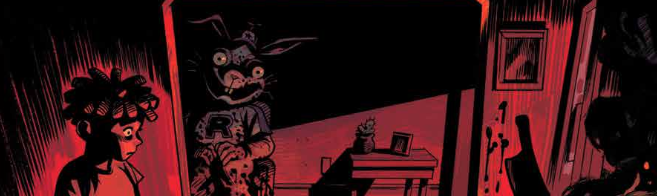
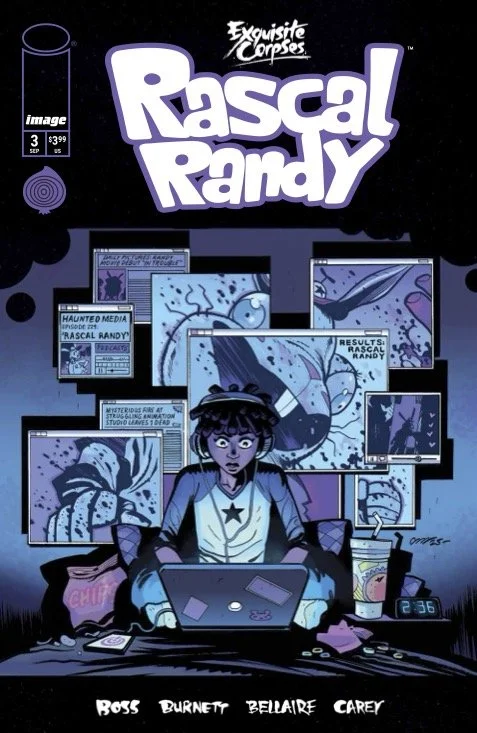
Friedman isn’t working fast enough. He’s frustrated with the whole thing, so he’s taking the next step and starting his own studio. His creation Rascal Randy is beginning to take-off. Success is just around the corner. Of course...success isn’t always the easiest thing to maintain control of. Meanwhile, a couple of kids in the present are dealing with tracking down someone who has been committing a string of murders in a Rascal Randy costume. What's worse: it's a parent that one of them may be a prime suspect if they can't find out who the real killer is.
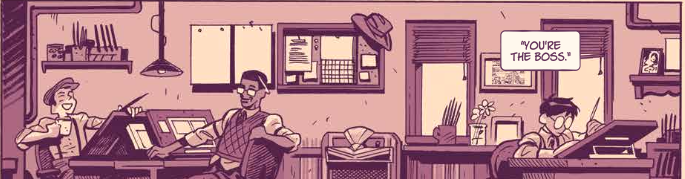
The dual-layered approach to the scripting allows the narrative to explore the origin of the character while also engaging in the suspense thriller that is the heart of the story. It's an appealing fusion of different elements. The dialogue is crisp and concise. Scenes move with a sense of urgency without feeling at all rushed. A couple of kids are looking to solve a mystery. It's not the most terribly original ideam but Boss makes it appealing with an ensemble of characters who all seem quite engaging emotionally. It’s that emotional connection that serves as the gravity for the story.
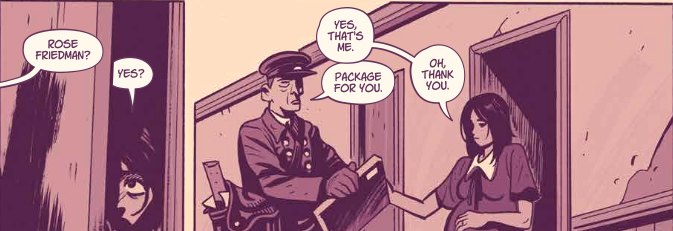
Brunett clearly defines actions plit between two different eras. There's a pleasantly aesthetic contrast between the scenes that are set in the 1920s and those that are set in the present. These are sharper edge to darkness in the contemporary scenes. There's a suitably nostalgic feel in the 1920s scenes. Bellaire does a lot of the work here with a really appealing color scheme to the historical scenes. There's a rich and nuanced darkness that she manages to deliver to the page in the contemporary intrigue. It all works as well visually as it does conceptually.
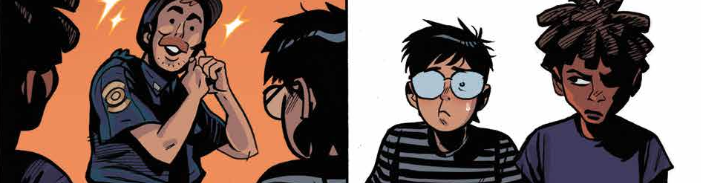
Friedman’s story is tragically universal for just about any artist working in comics in the early part of the 20th century. Turning it into horror is a pretty natural next step for horror fiction. An fuses together a whole bunch of different things that are common tropes in slasher horror while also exploring an aspect of the early pre-history of the comic book industry. The fact that none of it is necessarily terribly original isn't really that important. The juxtaposition between the two different elements is enjoyable enough.