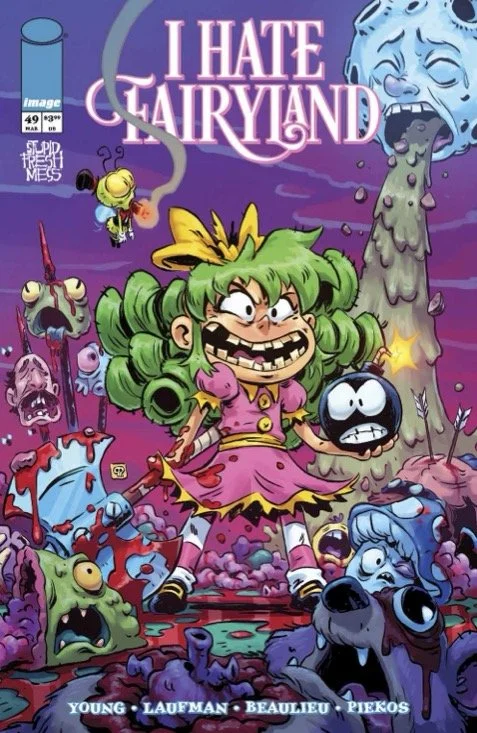
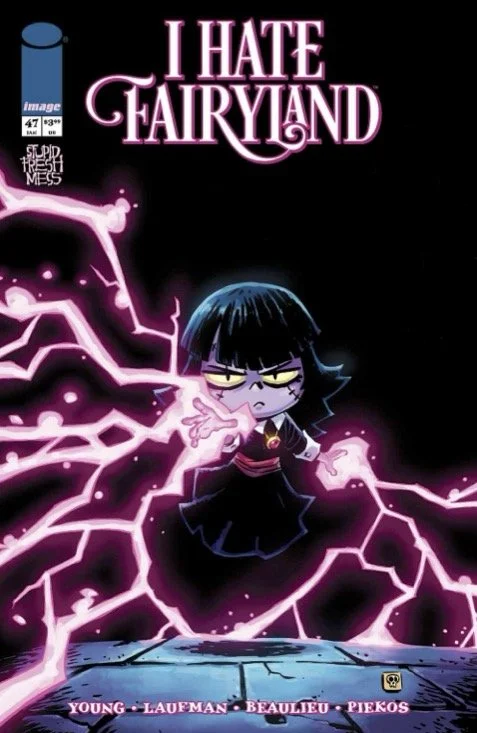
I Hate Fairlyand #47 // Review
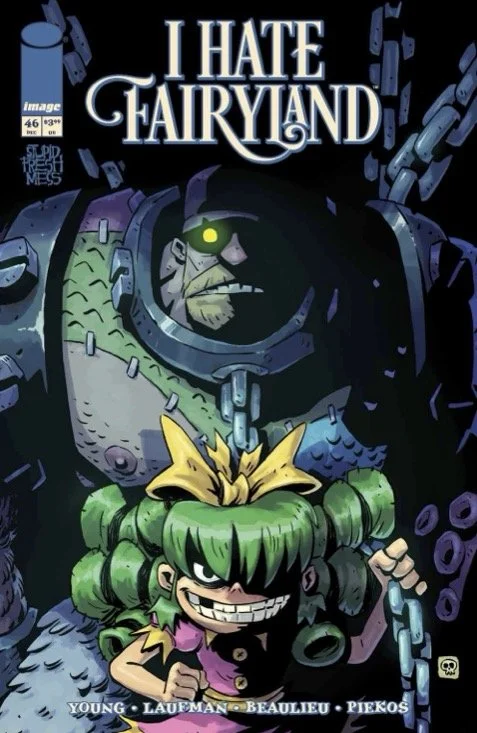
Gert created a person. But it wasn’t exactly creation. It was more like...reanimation. Having brought this monstrosity of a human being to life, she promptly lost interest in it. Unfortunately, it didn’t lose interest in her. The giant mane with tentacles of octopus and legs of living poultry was actually really, really clingy and needy. And so naturally she was going to need to make it a BFF so that it could promptly get lost and leave her in peace.Gert’s about to find out just how coplicated things can get in I Hate Fairlyand #47. Writer Skottie Young and artist Derek Laufman continue a weird fantasy comedy serial with colorist Jean-Francois Beaulieu.
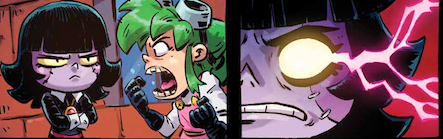
Before Gert can introduce her new creation to her old one, she’s going to have to give it a name. So she names him Pizza. (She was hungry at the time.) The BFF of Pizza isn’t exactly happy to be in the position of living-up to her intended purpose. (It wasn’t going to be too difficult to predict that. She DOES look like a sullen, little goth girl after all. Not exactly in the mood to be cooperative about anything.) And so Gert is kind of in trouble now with TWO creations potentially causing problems for Fairyland.
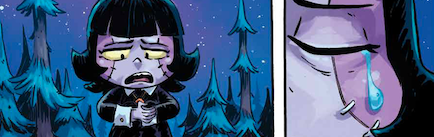
Young’s dark, little tail of whimsy is entertaining enough to keep the pages turning. The action is really large on the page. As is the comically exaggerated drama. In spite of all of its silliness, the central themes that Young is drawing from Shelley’s Frankenstein feel remarkably vivid. The responsibility that goes along with creation and exploration can be remarkably difficult things to maintain. Gert has always seemed a bit like an amplification of the darker qualities of humanity. And here she is just really trying to solve things in a way that's both remarkably difficult and overwhelmingly lazy at the same time. It's very funny stuff.
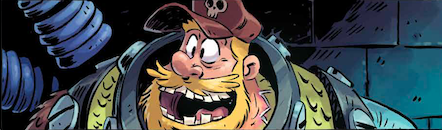
Laufman’s exaggerations continued to be a lot of fun. The overwhelming momentum of the action is ridiculously amplified. It's all so remarkably silly. But it wouldn't be even remotely compelling, or it, not for the fact that the artist does a remarkably good job of anchoring everything in really serious emotional drama. It's there on the page is very beneath all of the ceilings. But it's clearly there. And it needs to be there otherwise it would just sort of fly apart in an untethered fashion. Laufman does a good job with it. Beaulieu’s colors look as bright and vibrant as ever in another strangely satisfying issue of the series.
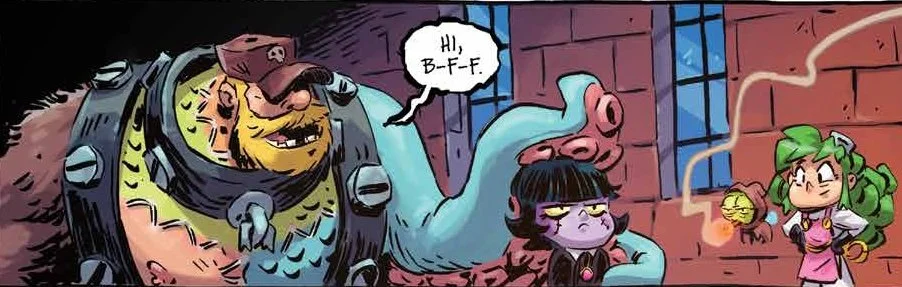
There's no, we're all feeling that this particular storyline could really go in a direction that has a kind of coherence that previous storylines in the series might not have always managed. The solid foundation of Mary Shelley's Frankenstein serves the overall format of the series quite well. There is a very solid approach to the story that manages to pay homage to be original work while moving things forward in the way that feels very relatable to contemporary culture.