
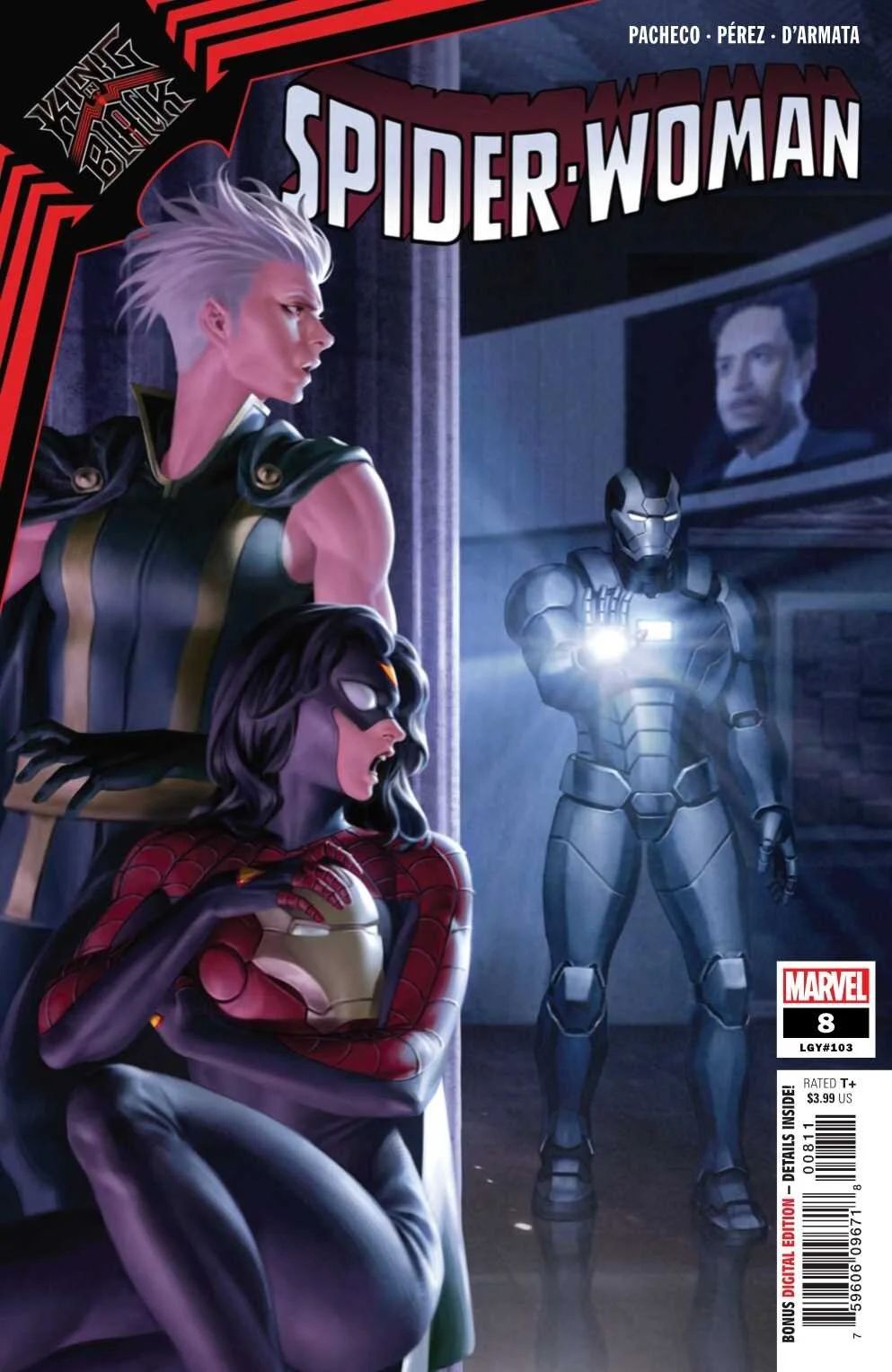
The old cliche of a hero reluctantly teaming-up with a villain finds new life in the hands of Pacheco and Pérez.
All in Female Lead
The old cliche of a hero reluctantly teaming-up with a villain finds new life in the hands of Pacheco and Pérez.
Though the issue has its moments, Gage and Edwards don't manage to add much to a long-running conflict between the two characters.
Fun enough to make one wish for a long-running Jinny Hex series.
A remarkably tight single-issue story.
An enjoyable adventure that's over far too quickly.
Haberlin isn't framing all of the plot elements quite as deftly as he has in previous issues.
Panosian and Ignazzi make Wilma seem like a truly fascinating character in her own right.
Pacheco keeps Jessica Drew firmly grounded in a dash of emotional realism.
The conflict between Emma and Diana never quite lives up to the potential for a truly satisfying climax of Tamaki's run.
Jed MacKay manages a few remarkable tasks in a multi-layered chapter.
This particular, little climax feels a bit flat despite some promising elements.
Doesn't really manage a hell of a lot of sophistication.
In this penultimate issue, Ms. Marvel faces old enemies, uneasy alliances, and betrayal from a friend.
Tamaki carves a lot of poetry into the plot.
Writer Bryan Hill develops a script that’s as smart as it is witty.
Still stuck in the year 2052, Captain Marvel is making the best of her time there, helping the surviving heroes hunt down their missing teammates.
The specifics may feel weak, but the drama has enough gravity to hold together the story.
Writer Cavan Scott tells a concise tale of contemporary fantasy that is brought to the page with some intensity by artist Jose Lucas.
Wilma may be the one element of the story that feels fresh and original.
Tamaki frames the climactic battle in a throne room on the other side of the planet.


